
11/3/2022
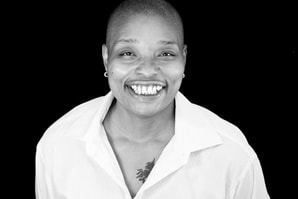
Venus Thrash was a co-editor of Beltway Poetry Quarterly. She authored the poetry collection, The Fateful Apple (Hawkins Publishing, 2014), nominated for the 2015 Pen America Open Book Award. Her poetry has been published in Public Pool, Torch, The Arkansas Review, and in the anthology Resisting Arrest: Poems That Stretch the Sky. Thrash is the recipient of a 2016 writer’s residency at The Vermont Studio Center. She was a co-director of the Joaquin Miller Poetry Series, a Cave Canem graduate fellow and a Summer Seminar in Kenya and Fire and Ink scholar.
Kaleigh Dixson is a high school English teacher, editor, and emerging writer. She is currently pursuing her MFA at American University where she is the fiction editor for Folio. In her writing, she hopes to expose the beautiful and cruel complexities of the places we call home, often by pulling from her own experiences growing up in Iowa and Colorado. She currently resides in Washington, DC with her bug-eyed Boston terrier.
Introduction to “Cat: a Narrative” and “Cast Away Stones”
By Kaleigh Dixson
What happens when memories of our dreams come to visit, once swollen with detail and desire, now drained and deflated, firmly rooted in the unreachable past? Where does the desire go, and how do we move forward? Venus Thrash’s stunning short story, “Cat: A Narrative,” grapples with these robust questions of unfulfilled longing, unveiling the cruel, gnarled underbelly of desire. Her language, thick with emotion and lyricism, reveals both the beauty and devastation a dream holds.
Though she hailed from the South, Thrash moved to Washington, DC when she was a teenager, where she spent the rest of her life. Thrash quickly became intertwined in the literary community, attending and reading at a number of local events and bookstores. She attended American University in the early 2000s, where she earned her MFA. She was predominately a poet—an unsurprising discovery, given the lyricism of her language—though she also wrote fiction. Her work has been published prolifically, most notably in Gargoyle, Beltway Quarterly, Torch, and the Arkansas Review. Her poems also appear in a collection of anthologies, such as Spaces Between Us: An HIV/AIDS Anthology, Full Moon on K Street: Poems About Washington, DC, Gathering Ground: A Reader Celebrating Cave Canem’s First Decade, Embodied: An Intersectional Feminist comics Poetry Anthology, and Haunted Voices, Haunting Places: An Anthology of Writers of the Old and New South. She is the author of Fateful Apple, which was nominated for the 2015 Pen Open Book Award. In vast simplification, Thrash was a poet and fiction writer, a speech writer, an editor, a professor, and a mother.
Throughout her work, I was deeply drawn to the specific, palpable grounding in place. “Cat: A Narrative” takes place in New York City, a city that is so often equated with hope and dreams. In this story, though, the landscape of New York City serves as a constant reminder of the protagonist’s shortcomings.
We follow Henry—a retired singer from the musical Cats—as he dips and weaves through his memories of the past while navigating a dull and unfulfilled present. Henry recounts his hopes to become a theatrical performer as young man when he moved to the city, propelled by the support of his small hometown community and his passion for singing: “Friday Night Fish Frys, Wednesday afternoon bake sales, beat-up collection plates, passed around the church every Sunday morning…Oh, how those glorious words of encouragement sustained Henry in the lean years of waiting tables, dance training, and fruitless auditions.” Years later, having failed to fulfill the dreams that colored his youth and lacking a genuine interest in anything as an older man, he becomes increasingly fixated with a silver cat that shows up in his backyard one day meowing a bluesy tune. As the plot unravels, so does his obsession with the cat.
Thrash’s predominant focus on poetry and her love for music bleeds clearly through in “Cat: A Narrative.” The sound of music is thick in the story, the language reflecting the musicality and beauty of jazz. I was particularly in awe with the way she writes about voice in the piece; a couple examples of these descriptions include “smoke-hardened, liquor scorched voices” and “voices massaged with oil and honey” and “Henry’s burnt sugar tenor bubbles and thickens into a silky baritone…”. Not only is the diction gorgeous, but the lush lyricism reflects the sound of music. As Thrash revealed in the interview previously mentioned, it took her five or six years to complete this twelve-page short story, which evolved significantly over the years. The attention to each sentence, each word, certainly shows. The language is stunningly lyrical, brimming with alliteration and euphony and, above all, rhythm.
“She was a lover of music,” said Derrick Weston, who attended the MFA program with Thrash as a fellow poet. “I remember going over to her place sometimes and she would break out the vinyl records or some CDs…Music was always part of her existence at her house.”
The music of language, while highly concentrated in “Cat: A Narrative” permeates throughout Thrash’s body of work. In her short story “Cast Away Stones,” we follow a hardened, yet deeply emotional man who, upon his recent release from prison, has one mission: to urinate on his mother’s grave. Like “Cat: A Narrative,” the language swells with intricate lyricism. She writes tenderly, again, of remembering:
Owen could still remember what freedom tasted like in a flaky-crust beef patty from Kingston Carryout on the street corner where he grew up and what freedom sounded like coming out of Al Green’s silky throat and Aretha’s soulful treble on his stereo and what freedom felt like slapping cold and icy against his face in winter.
Reading through her impressive body of work, I found myself transported; through grounding us in a specific place and weaving around the reader a rich, sensory experience, we are submerged into another reality. Whether that reality is a reflection of our own or entirely different, the texture and nuance she imbues in the world makes it entirely absorbing and believable. So many of Thrash’s poems take on bulky themes of love and romance and loss, and yet her frame and study of the small moments creates the flesh and bones of the poems, something to grab onto and digest. “She was really good at tackling the small moments,” said Weston. “She was good at articulating her place in those moments, whether she was the observer or she was writing a poem about her actual experience.”
In this study of small moments, “Uncivil” comes to the forefront of my mind, a poem in which the speaker admires her lover while at a wedding ceremony that is not their own, which in turn extends to a rebuke of the government’s power to dictate who we can love. It is also a celebration, however, of love that runs deeper than this power:
& we won’t exchange vows or rings,
but smoldering kisses & lingering hugs,
& there will be no parchment certificate
stamped with any State’s approval
confirming we’re married or in love,
but we will jump over a brand new straw
broom, we will light candles & pour red
wine into the earth where our ancestors sleep…
The topic of marriage equality and homophobia is, of course, massive, yet through the grounded, specific story Thrash tells in the poem, she swiftly untangles the intricacies with a steady, deft hand.
Upon watching a video of her reading of “Uncivil” at the Split This Rock Poetry Festival, I was captivated by the energy and passion in her reading. Her voice rang with conviction and the excited movement of her hands and body drew me in, and when she sang the lyrics of Nina Simone and Aretha Franklin I was brought to tears. “Her voice alone. Whenever she read, you couldn’t not listen,” said Weston. He’s certainly right about that.
So much of Thrash’s work, including “Uncivil” and “Cat: a Narrative,” to name just a couple, focuses on the strange, all-consuming emotion of desire. The subjects of Thrash’s work must often reckon with their desires, whether they come to fruition, morph, or grow hollow with the passage of time. Desire reduces us, enlivens us, forces us to look inward. No matter, longing and desire are part of the human experience, and we are all bound to get ensnared in its sticky web at some point. Though Thrash might have made it look easy, it is no easy feat to capture the intricate experience of desire.
When Weston met Thrash in the MFA program, it was the early 2000s. By then, Thrash was already established in the literary community. That said, as a queer Black woman, she was still pushed to the margins. Weston explained, “In some spaces her presence was challenged…she felt that and recognized that and it definitely bothered her more than she let on…I know what it means when you start to go, is anybody even listening?” In the face of these challenges, she created work that was honest, deeply personal, and cut right to the meat of human experience. Thrash spoke and wrote her unfiltered truth, and her legacy in the DC community and beyond thrives through her work.
 GRACE AND GRAVITY