
11/29/2022

Constance Sayers is the author of the #1 Amazon best-selling novel, A Witch in Time (2020 Redhook/Hachette) as well as The Ladies of the Secret Circus (2021 Redhook/Hachette) that received a starred review from Publishers Weekly.
A finalist for Alternating Current’s 2016 Luminaire Award for Best Prose, her short stories have appeared in Souvenir and Amazing Graces: Yet Another Collection of Fiction by Washington Area Women as well as The Sky is a Free Country. Her short fiction has been nominated for the Pushcart Prize and Best of the Net.
She received her master of arts in English from George Mason University and graduated magna cum laude with a bachelor of arts in writing from the University of Pittsburgh. She attended The Bread Loaf Writers Conference where she studied with Charles Baxter and Lauren Groff. A media executive, she’s twice been named one of the “Top 100 Media People in America” by Folio and included in their list of “Top Women in Media.”
She lives outside of Washington DC. Like her character in The Ladies of the Secret Circus, she was the host of a radio show from midnight to six.
To learn more about Constance Sayers’s work, visit her website.
Introduction to “Pimping”
By Grace Black
The “fallen woman” was an archetype of Victorian literature that described a woman who’d “lost her innocence” (read: had premarital sex) and was thus forced into a life of poverty and prostitution before, if she was lucky, dying young. Modern readers might laugh at such an archaic view of women’s sexuality, but Constance Sayers’ short story “Pimping” reminds us that such attitudes are very much prevalent in today’s world. However, Sayers also makes sure to remind us that these views are slowly dying and that we shouldn’t despair.
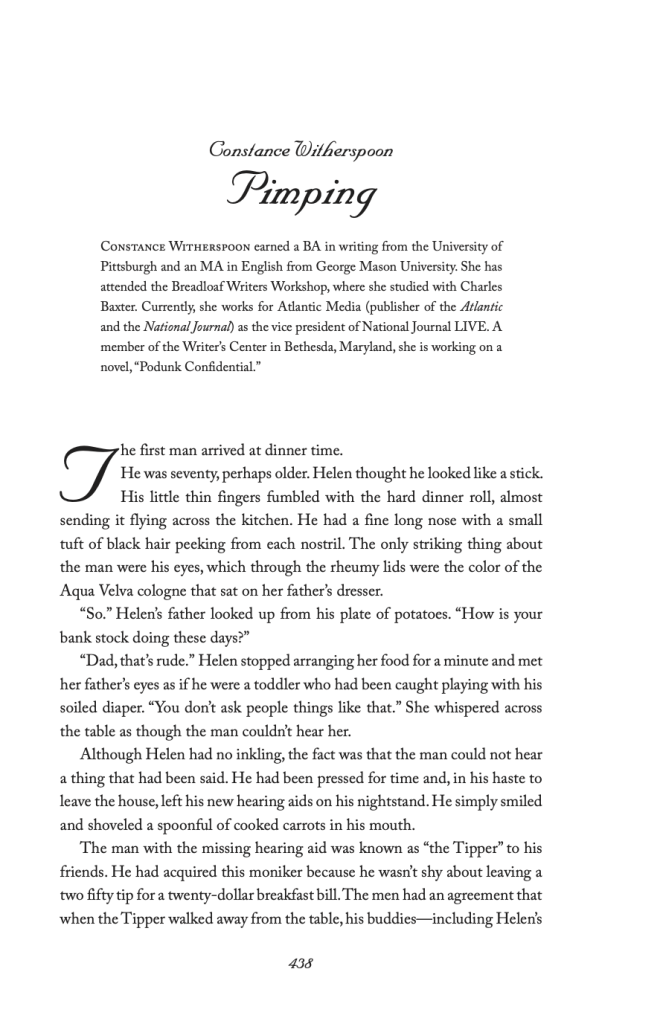
There is a distinct lack of pretension with which Constance Sayers writes Helen, the protagonist of “Pimping”, that makes it an utterly refreshing read. In the first paragraph of the story, Helen compares the blue of a man’s eyes not to the sky or the ocean, but to “the Aqua Velva cologne that sat on her father’s dresser.” This straightforward voice is no accident; the story later reveals that Helen is a failed poet who was intimidated into quitting after deciding that her poetry, concerning things like “her childhood in Pittsburgh and the importance of a Boz Scaggs tape” was too quaint for her to be a real poet. Yet, Sayers makes sure not to condescend towards Helen. She recognizes that her protagonist is intelligent and well-educated and does not make any attempt to try to write her as a small-town hick. It makes sense; Sayers herself comes from Brookville, Pennsylvania and earned her Bachelor of Arts from the University of Pittsburgh, where both “Pimping” and her other story, “Tending,” is set. The protagonist of her 2016 story, “Tennessee”, comes from Cleveland, Ohio. She would be familiar enough with the people of blue collar neighborhoods to give them proper respect.
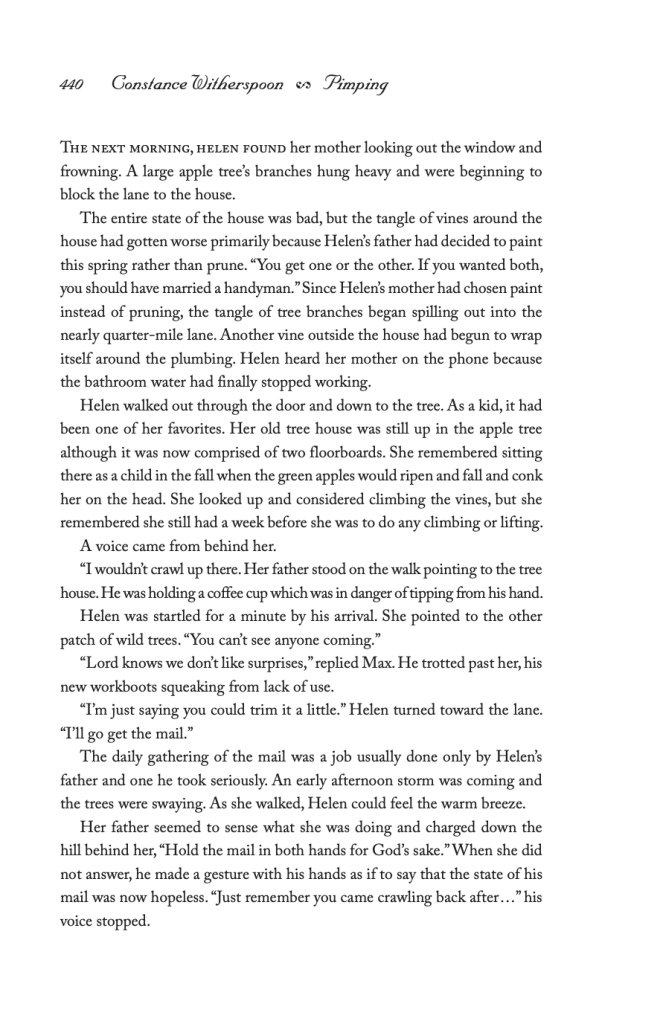
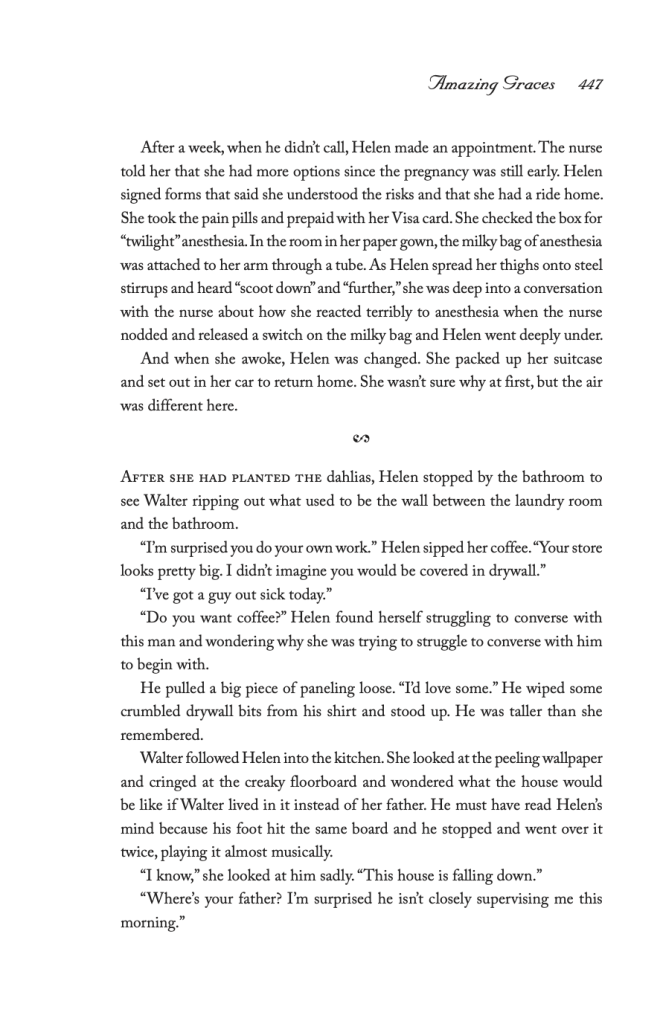
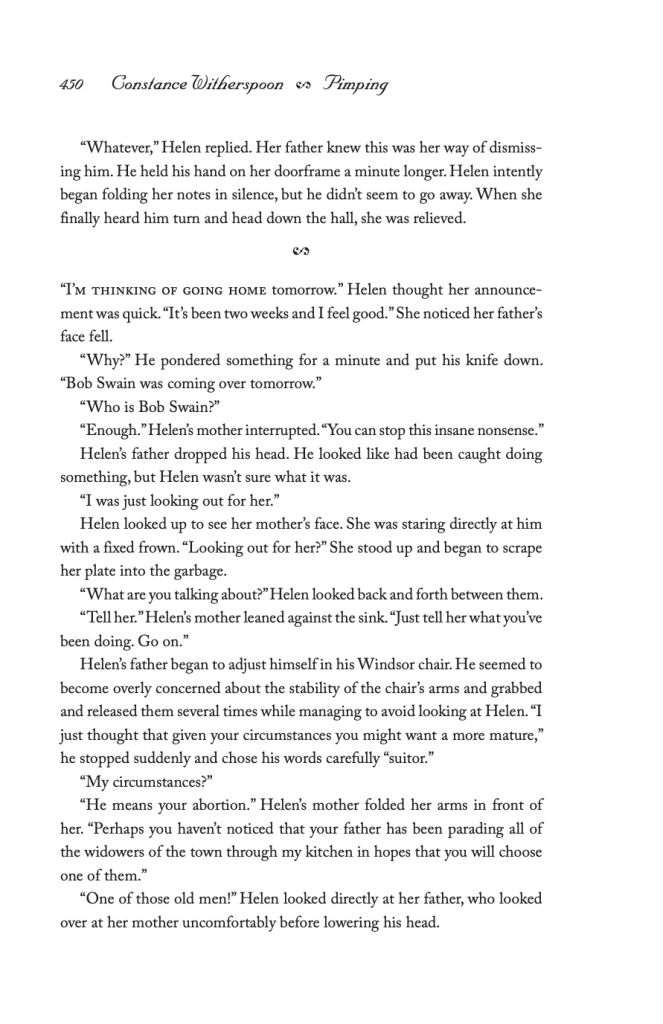
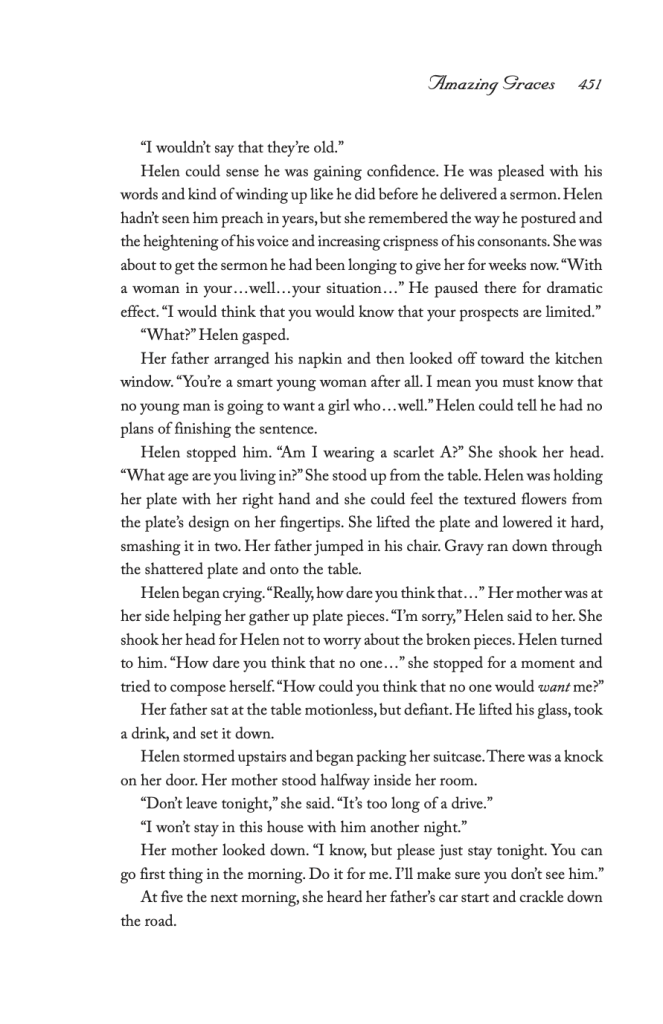
Such respect for her protagonist’s intelligence is vital given that the premise of the story, which feels especially relevant given it involves a woman’s right to choose, involves an inherently old-fashioned and dehumanizing scheme orchestrated by Helen’s father. Near the end of the story, Helen discovers that her father has been inviting over older men with the intent of having Helen date one of them. The necessity of this stems from Helen’s recent abortion, which Helen’s father feels renders her “prospects” to be “limited”. Given that Helen’s father does most of the talking during these encounters and that Helen even leaves halfway through one man’s visit, I get the mental image that Helen’s father is a medieval lord who is trying to quickly arrange a marriage for his pregnant daughter in hopes of avoiding shame. His treatment of her abortion as disgraceful and limiting of her “prospects” is reminiscent of the trope of the “fallen woman”. Helen even remarks upon the ridiculousness of his views, asking “Am I wearing a scarlet A?” and “What age are you living in?” Considering that the thought that no one would want her had not even occurred to Helen at this point, the entire undergoing of Helen’s father, and the fact that his top priority after his daughter has undergone this traumatic event is her marriageability, might even be laughable if it did not reflect such a depressing reality about the way women and their sexualities are viewed.
Although “Pimping” has nothing to do with literal prostitution, the titular “pimping” is more mundane but no less emotionally brutal than what we might see in a LifeTime movie warning against the dangers of sex work. Worst of all, the person doing the pimping is the protagonist’s own father. It is also worth noting that the father’s reasons for doing so sound eerily similar to what a career pimp might say about one of his prostitutes; now that Helen has had an abortion and is no longer “pure”, she must contend with older and less desirable men. Sayers is wise enough to understand that just because it is a family member doing it does not make it less disgusting than if it were a random man.
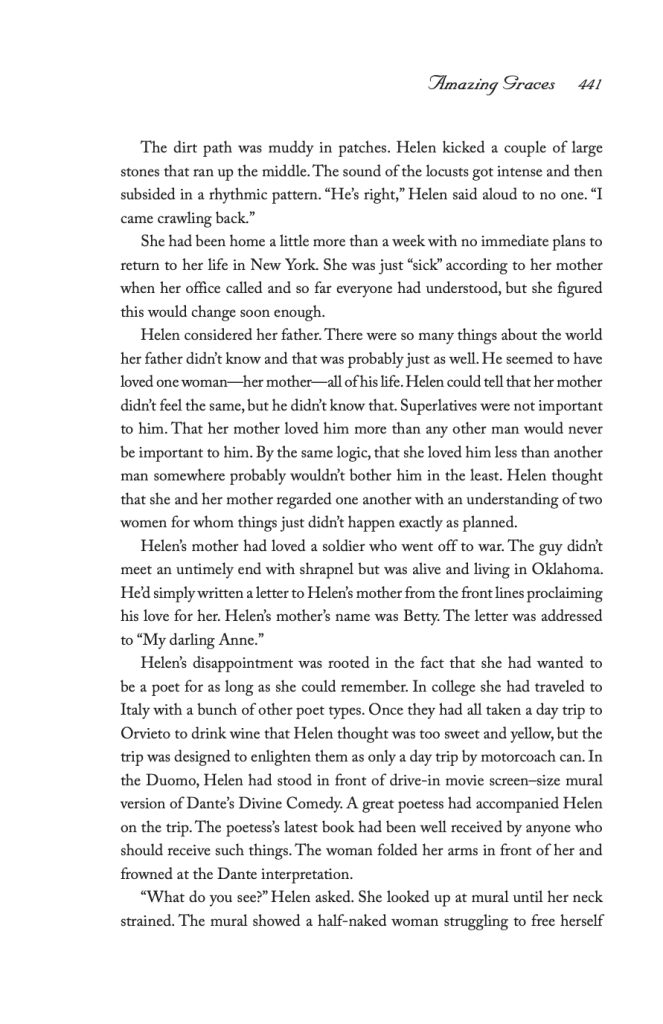
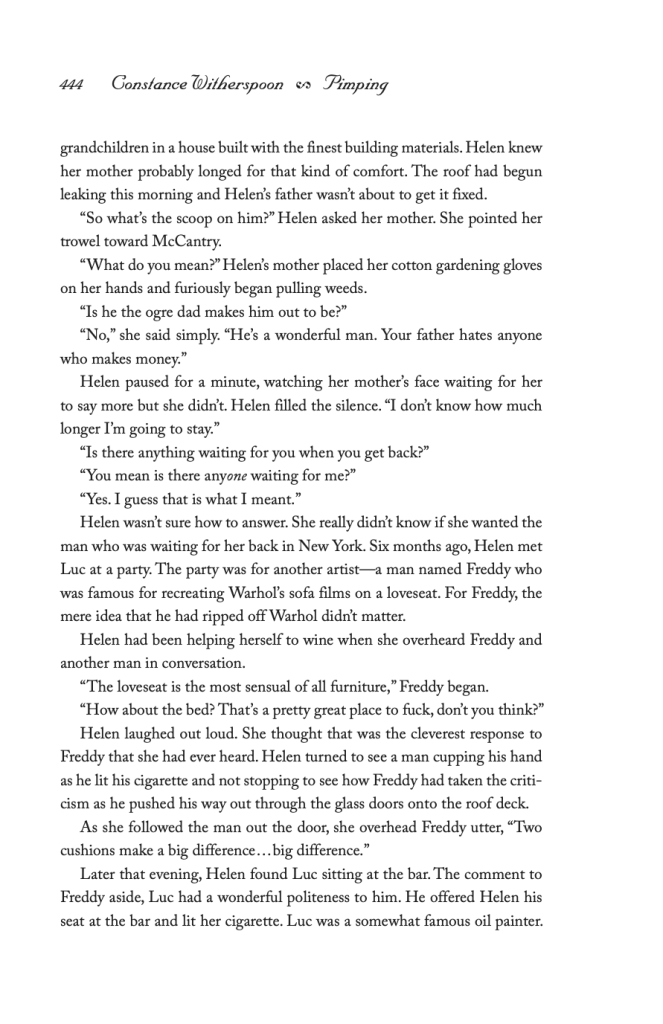
After everything she is feeling, the fact that her father sees her as “damaged goods” is the cherry on top of an already terrible sundae. Helen is reeling not just from the physical and emotional effects of her abortion, but from her ill-fated romance with Luc, the father of the aborted fetus. Throughout their relationship, Helen had noticed that Luc’s attempts at painting Helen would often come out resembling his ex. Given that Helen’s mother was cheated on by the man who she had originally wanted to marry and instead settled for Helen’s father, it would be quite easy for Helen to feel as though being a second choice runs in her family.
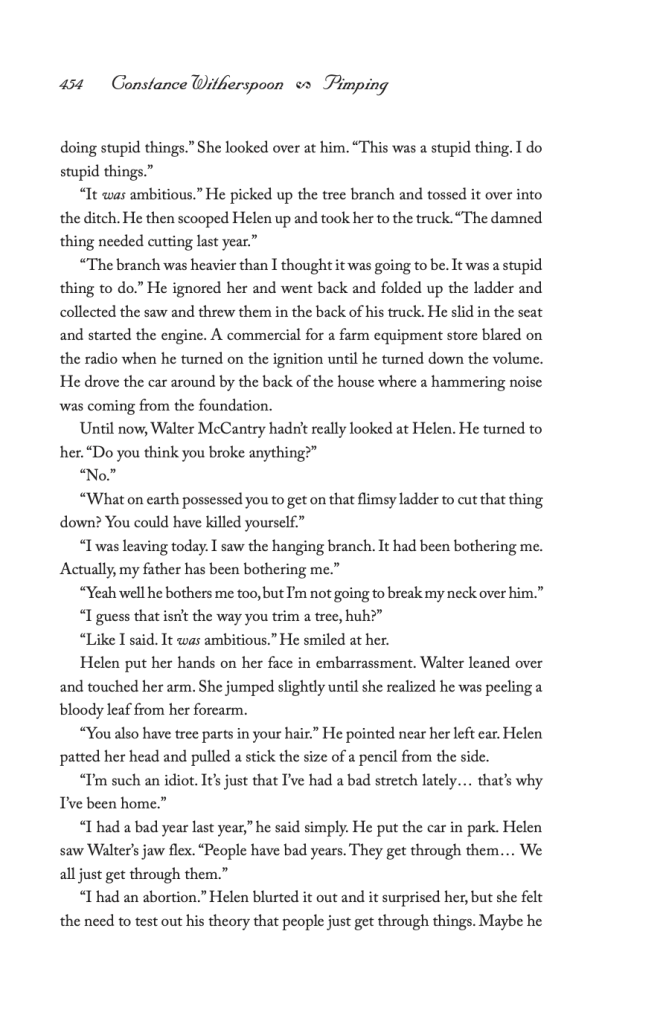
Hearing her father’s opinion that her abortion has given her “limited prospects” must only exacerbate this feeling, which is why hearing from Walter McCantry, one of her prospective “suitors”, that she is “absolutely beautiful” and that “any man would want (her)” is so heartening. Not only does it give Helen hope about her ability to be loved, but it tells the audience that the rest of the world does not necessarily feel the same way that Helen’s father does and that attitudes towards women are changing and evolving for the better.
The aforementioned lack of pretension, the focus on the small, is what makes Helen and her story feel so real. At one point, while avoiding one of her “suitors”, Helen returns to her childhood and goes through old love notes that she keeps in a cream vinyl box under her bed. She reads one, whose writer describes how “he loved her more than a Camaro, he loved her more than basketball, and he loved more than Led Zeppelin.” The specificity and realism of this note makes it feel all the more personal. There is also a sense of real melancholy to this scene; Helen has fled what she does not yet know is an attempt by her old-fashioned father to set her up with a man to whom she is not attracted based on the idea that no one will ever want to marry her now that she has had an abortion. She remarks as she reads the note that “this might have been the simplest, most passionate letter of love a guy like him ever composed.” The reader gets the sense that, perhaps, Helen feels that this simple note will also be the most romantic love letter that she will ever receive.
That is why Helen’s final conversation with Walter McCantry feels like such a relief after Helen constantly feeling like her milquetoast existence is as good as life will ever get for someone like her. The scene of Helen reading the notes, coupled with her recollection of her perceived failure as a poet, her relationship with Luc, and her description of herself and her mother as “two women for whom things just didn’t happen exactly as planned”, gives the sense of Helen as a person for whom life has no more exciting things to offer. It reminds Helen, and the reader, that there is always room for things to get better and that one, or even two or three, bad experiences does not render a person completely hopeless.
Given the current political landscape, such optimism might feel foolish, but sometimes, hope is needed as a reminder to keep going. “Pimping” serves to assure readers that the fight for reproductive rights is a difficult one, but that things are getting better and that we should never give up on it.









 GRACE AND GRAVITY