
11/14/2022
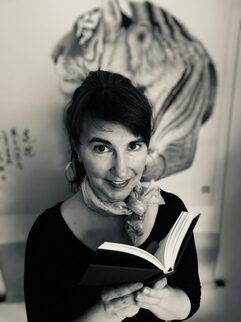
Christina Campbell co-founded the singles’ advocacy blog Onely.org while earning her MFA in Creative Nonfiction at George Mason University. Her essays about marital status discrimination have appeared in The Atlantic and elsewhere. Her essay And Sarah His Wife, about mental health, misogyny, and colonial America, won the Michigan Writers Chapbook Contest. An excerpt from her memoir-in-progress was a finalist for Craft’s Creative Nonfiction Award. She lives in Northern Virginia with her infrared sauna and two semi-geriatric cats.
To learn more about Christina Campbell’s work, visit her website.
Introduction to “The Bad Feeling”
By Ariane Southern
For those living with invisible illnesses, like myself, Christina Diane Campbell’s “The Bad Feeling” is a painfully exquisite moment of visibility and recognition. Campbell captures a moment in her life she wished she could relish while exploring her complicated relationship with her body as it constantly disrupts her joy. She highlights the layered resentment and shame of existing in a reality the people around you can’t understand. Confronting the constant physical and emotional drain these illnesses impose on every aspect of life, readers will glimpse the full-time job our bodies can be.
Illness and writing have had a long relationship. Many fiction writers have used illness as inspiration for or as an allegory within their work. The illness narrative, as a specific form of storytelling, is being recognized not only as a particular type of creative nonfiction but as an essential method of informing professional medicine of the reality of their illness. All diagnoses begin with someone’s story. Opening the floor to a more diverse and personal voice in the literary conversation and perception around illness is crucial. Due to the misrepresentation and vilification of the ill and disabled throughout history, authors with authority on the subject should be the new status quo.
In “The Bad Feeling,” Campbell blends her travel memoir with an illness narrative, reflecting on her misunderstood symptoms (are they real or imagined) with her current knowledge and diagnosis of chronic Lyme disease. This piece’s personal narrative creative nonfiction form stretches beyond the limits of her memory to illustrate the arc of learning to understand her body. Campbell includes the story of the missing Jim Thompson and her many theories of the cause of his disappearance as an allegory for the overlapping and conflicting realities of her perceptions of her life and the possible fallout. Is the pressure of others to blame for her pain, or is it her own stubbornness? Or is she just dealt an unlivable fate? Is the burden we place on those we love more than the burden our loss would be? “The Bad Feeling” is about her symptoms and frustration with her body’s limits and the consequences. Revisiting her experiences with new understanding creates a new narrative for her past.
Advocating for the recognition of chronic Lyme disease is only one of many passions Campbell explores via her writing and activism. Her frustrations fuel her practice as she tackles so many of the world’s problems with her pen as a writer of creative, narrative, and expository nonfiction, sometimes a combination thereof. One such passion, ghost hunting, developed into the chapbook And Sarah His Wife, exploring the dramatic, much-debated story of Sarah “Sallie” Shelton Henry. Blending historical tales and limited resources, Campbell explores her feeling of kinship to the troubled and ill-understood woman remembered only by meager outside perspectives of her life colored by the invisible affliction of mental illness and the diminished position of women at the time. Campbell’s writing targets and uncovers the hidden, even if it includes uncomfortable self-realizations. Her bravery in confronting the ugly feelings most try to ignore gives a voice to those who were invisible before.
While her writing includes a wide variety of topics, including Lyme disease, singlism, and the curious ecology of people and the world, it is Campbell’s authentic connection and graceful integration of her own experiences that add depth and gravity to her work. Campbell’s self-described “soap boxes” explore the invisible fences people put around categories they themselves don’t belong to: the unwell, the unmarried, and anyone not cis-male-identifying.
Campbell studied professional writing and earned her MFA in creative nonfiction from George Mason University and thus led to her entry into the DC literary scene. Currently residing in Northern Virginia, Campbell survives the banal drudgery of an office job with a government contracting firm to sustain her cat companions and creative career.
Campbell started the blog Onely.org with MFA classmate Lisa Arnold to confront the stereotypes, misinformation, and discrimination faced by singles worldwide. In addition to being frequently featured and quoted, she has been asked by publications featuring popular science and culture to write expanded articles based on arguments made in her blog posts, including “The High Price of Being Single in America,” featured in The Atlantic. Other publications quoting or featuring Onely include Psychology Today; The Sydney Morning Herald; Boston Magazine; MSNBC.com; and books on singledom by Bella DePaulo, Sara Eckel, and Eric Klinenberg.
According to her writings and social media, her initial focus was science and nature during college in Kalamazoo, Michigan. She identifies Leelanau county in western Michigan as her ‘adopted homeland’ and hopes to retire there someday. Her previously mentioned chapbook won the Michigan Writers’ Cooperative Press Chapbook Contest in 2017.
“How Ghost Hunting is Like Living with Lyme Disease,” published in Narratively, explores the intersection of her own experiences and how her perspective is informed, if not directed, by her illness. This intersection allows for a bridging of understanding for those who do not experience the realities of Lyme or other invisible illnesses. For Campbell, it seems that looking for specters is like looking for the elusive evidence of Lyme disease. While struggling to hear a ghostly voice or see a transient face, Campbell fights muscle pain and tinnitus. She hopes that ghosts exist so that we are not limited to the corruption of the body.
“The Bad Feeling” is a deeply personal narrative of Lyme disease’s effects and the impact of not understanding your own body. Campbell blends the remembrance of her travel and physical symptoms with her current understanding of her diagnosis to reinterpret her experience and explore how her perspective has changed. Campbell recounts a trip to Malaysia with her boyfriend “Cecil,” who had known Campbell before she began having unexplained symptoms of fatigue and pain. They traveled widely and immersed themselves in the culture and natural environment of the countries they visited, taking a rougher, less expensive, and less accommodating journey. Not understanding the reason for her fatigue and pain, and hungry for maximum participation, Campbell recalls the frustration and guilt of being the half that can’t keep up. She, like many, feels trapped by her body; so many of us are in a hostile relationship with ourselves.
As she explores these memories, she discusses the proposed biological basis of her past symptoms explaining the theories of chronic Lyme disease under debate. In clinical and critical terms, Campbell describes the failure of doctors and the established medical industry to be allies in her fight against this disease. At the same time, there is a fight within her to be a different person, to contort herself to some past form. Years later, the frustration of having no diagnosis is replaced with endless political and medical punditry, leaving patients in limbo. A complete understanding of Lyme and its cure remain elusive.
Chronic long-term Lyme disease is especially debated, medically and politically, making finding diagnosis, support, and treatment all the more difficult. This story is particularly relevant in our post-COVID world. The recognition of long COVID as a consequence of COVID-19 infection is said to have resulted from the collaboration of those affected on social media. This parallels the dismissive nature to which the medical community approached the debate on chronic long-term Lyme disease. The illness narrative has the power to influence the behemoth of industrialized medicine.
The complex presentation of symptoms, in addition to the lack of specific diagnostic tests, only adds to the absence of any unified opinion on Lyme disease, especially its chronic long-term form. The current medical conversation does not include an accepted clinical definition for chronic long-term Lyme disease, and its very existence is still not well received by the medical community, according to USA Today. Politics have too strong a hand in the lives of those living with Lyme. State legislation, which varies widely in this case, determines accessibility to care in addition to how the epidemic is addressed on a public health scale. Federally, the Lyme and Tick-Borne Disease Prevention, Education, and Research Act of 2013 established the Tick-Borne Diseases Advisory Committee to ensure interagency coordination regarding tick-borne disease efforts and communication with constituents. This widespread recognition is the validation that those suffering from and advocating around Lyme have been waiting so long for. The public conversation around Lyme disease has also increased in recent years, with more posted warnings in tick-populated areas to advise visiting nature lovers.
Illness is all-consuming, especially when you don’t understand what is causing it. It is the last thing you want to think about, but it is the only thing on your mind once symptoms set in. Every joy holds an ever-present anvil overhead, waiting for the most inopportune moment to plummet and decimate all hopes for the day or even week as you lean too far into every peak of relief. Then you’re stuck in a spiral of questioning whether your joy is worth the pain it brings after, if you could exist without it and the pain may be less, but you’re too stubborn to give up on any vestige of a previous healthy identity. The intimate voice in Campbell’s story portrays an experience relevant to anyone who has managed a chronic long-term illness, most especially an invisible one. Still, in a time where bodies are a battleground, anyone feeling the least bit othered and utterly frustrated by it can find solace and kinship in this piece.

 GRACE AND GRAVITY