
4/25/2022

Dr. Barbara Mujica is a retired Georgetown Professor who has spent her career writing in many different genres. She is well known for her novels Frida, Sister Teresa and I am Venus, but has also had short stories published in Grace & Gravity, 0-Dark-Thirty, The Minnesota Review Pangolin Papers, and The Literary Review, as well as essays in The New York Times, The Washington Post, and The Huffington Post to name a few.
Her focuses have been on Spanish theater and literature, women’s writing, and veteran’s stories. She has won awards from the Maryland Writers Association for the I Am Venus, and for the stories “Imagining Iraq,” “Ox,” and “Jason’s Cap.”
To learn more about Barbara Mujica’s work, visit her website.
Ashley Goucher is originally from New England, currently studying at American University in Washington D.C. She is an undergraduate student working toward her Bachelor’s degree in Literature concentrating on creative writing. She aspires to start publishing works soon, mostly writing in fiction but enjoys experimenting with other forms. She also hopes to begin working within the literary community upon graduation in December. Until then, Ashley continues to absorb herself in the arts and enjoys creating work from the world around her.
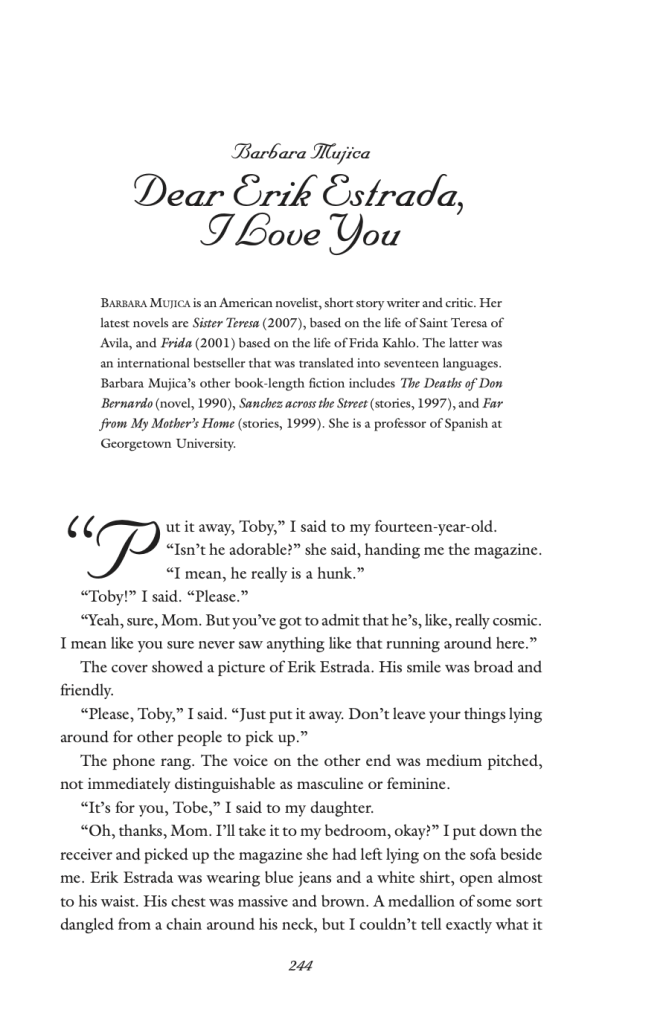
Introduction to “Dear Erik Estrada, I Love You”
By Ashley Goucher
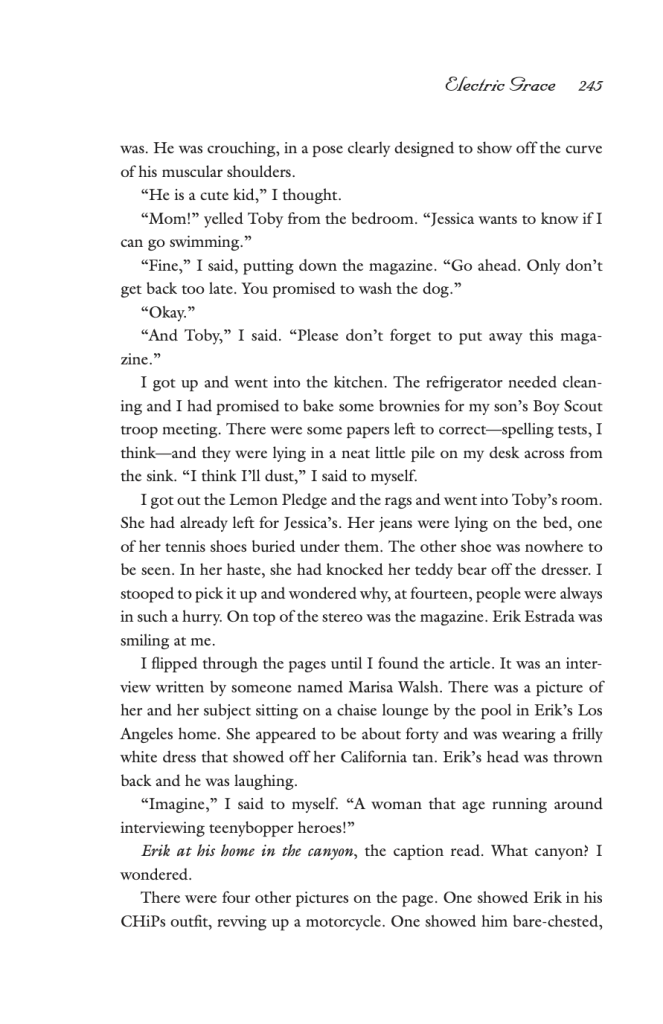
In a world that has been filled with so much unknown, it is inevitable for people to want to disconnect. There is a need sometimes to pull away from what is happening in our everyday lives – even if just for a few minutes of relief. There are many activities some use to escape; reading, writing, artwork. For others it may be imagining meet-ups with a celebrity seen on the cover of your child’s magazine. This is what “Dear Eric Estrada, I Love You” shows as Clea deals with her reality through dissociation by imagination.
This piece was originally written by Dr. Barbara Mujica and was published in both Grace and Gravity’s Electric Grace and her own short story collection Sanchez Across The Street. Mujica is from L.A. but has resided in D.C. for about 40 years now. She has been writing through her time at high school, UCLA and getting her Ph.D. before becoming a professor at Georgetown. The now-retired Georgetown professor has immersed herself in Spanish theatre and literature, women’s writing, and is also an advocate for veterans. She was a faculty advisor of Georgetown University Student Veterans Association (GUSVA) after she realized there were no outlets for veterans at the school. Now that Dr. Mujica has retired, she is writing novels full time. She has a new one, Miss del Río, scheduled for publication in October, about the Mexican movie star Dolores del Río. She is well known for her other novels, including Frida, Sister Teresa, and I am Venus. Along with short stories collections such as Sanchez across the street, and Far From My Mother’s Home. Dr. Mujica also recently released a short story collection called, Imagining Iraq. Her other short stories have appeared in 0-Dark-Thirty, The Minnesota Review Pangolin Papers, and The Literary Review, while her essays can be found in The New York Times, The Washington Post, and The Huffington Post to name a few.
Dr. Mujica’s work is a great reflection on humanity told through her vivid characters. When Dr. Mujica and I talked about her writing, and where her inspirations come from she shared that her writing draws from the world around her. Mujica’s stories in her collection Imagining Iraq were all inspired by the veterans she was in touch with at Georgetown. Having a connection with veterans through her son who served in Iraq, she wanted to understand what they went through overseas. She spent her time listening to their stories and eventually started to write them down, eager to share them with others. When speaking about her inspiration to create such humanized characters, she said, “I don’t believe that there’s such a thing as fiction, I think that everything comes from somewhere, from some lived experience.”
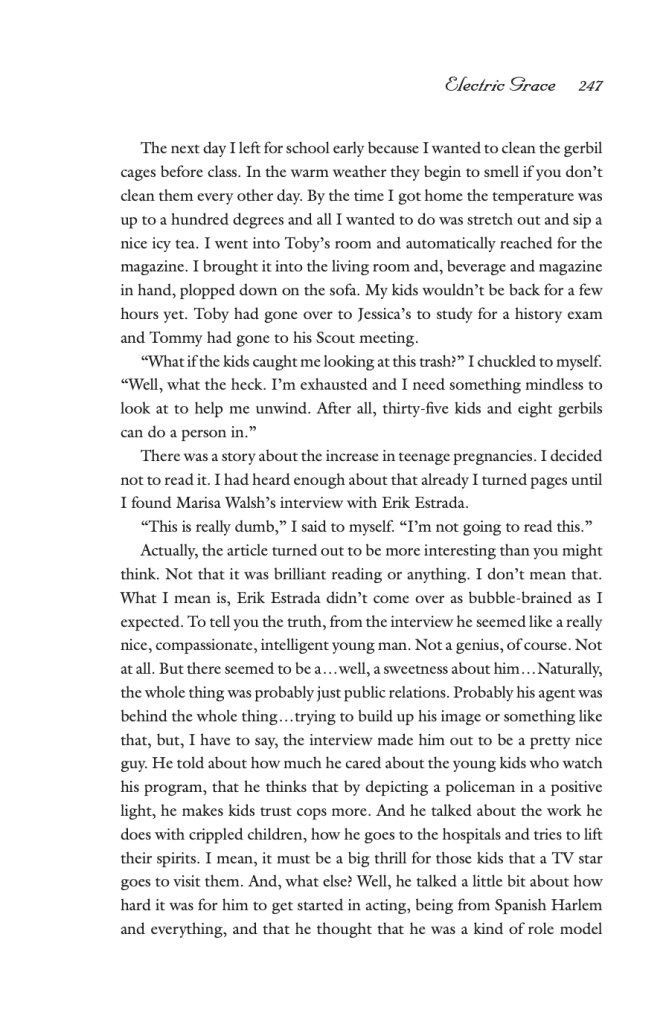
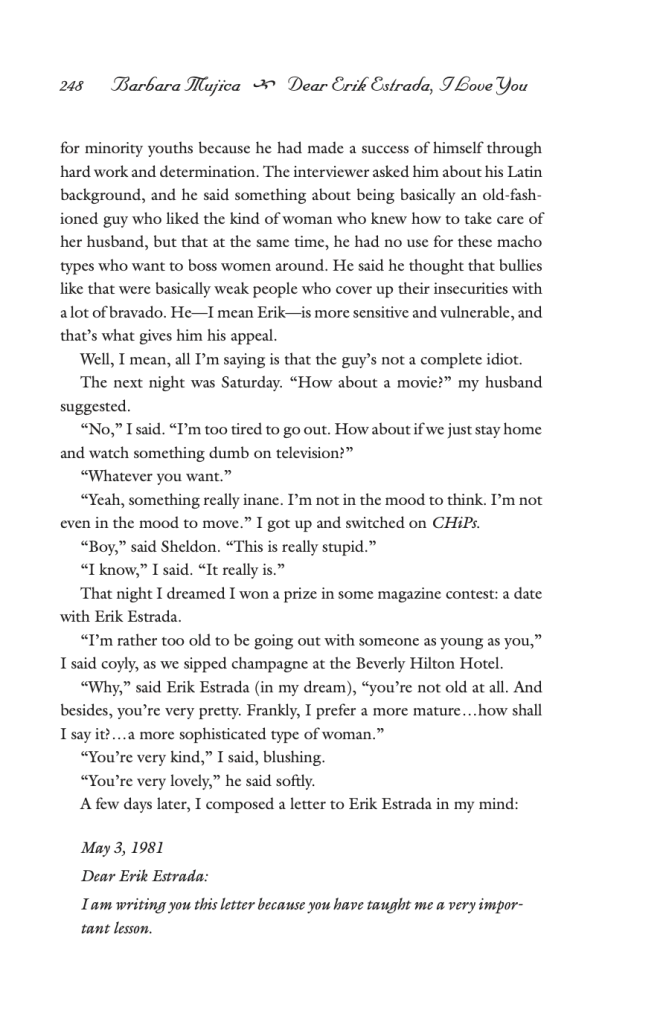
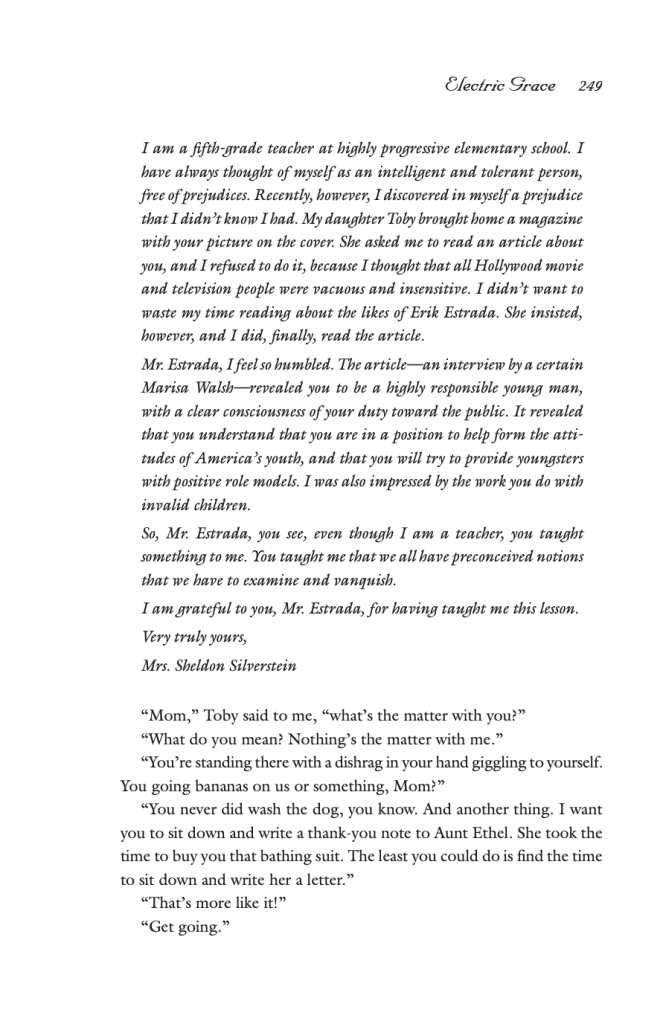
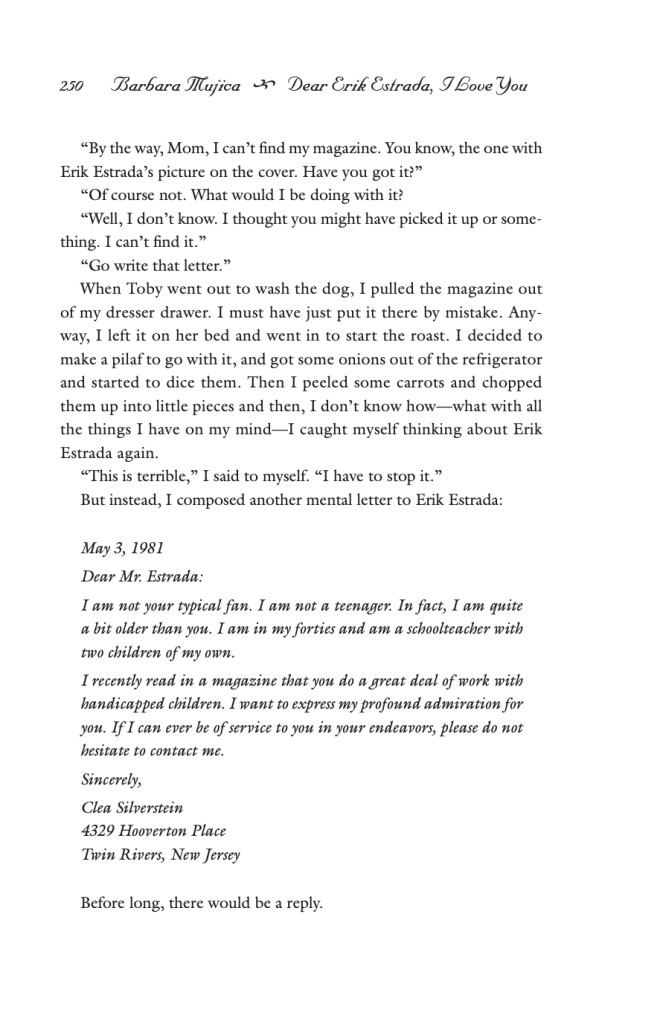
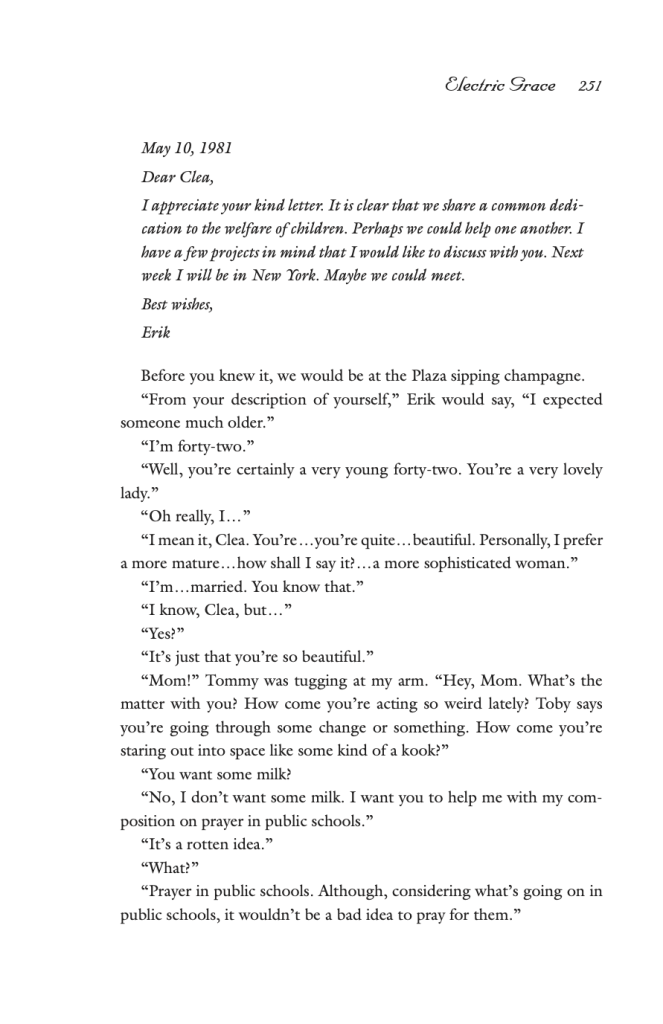
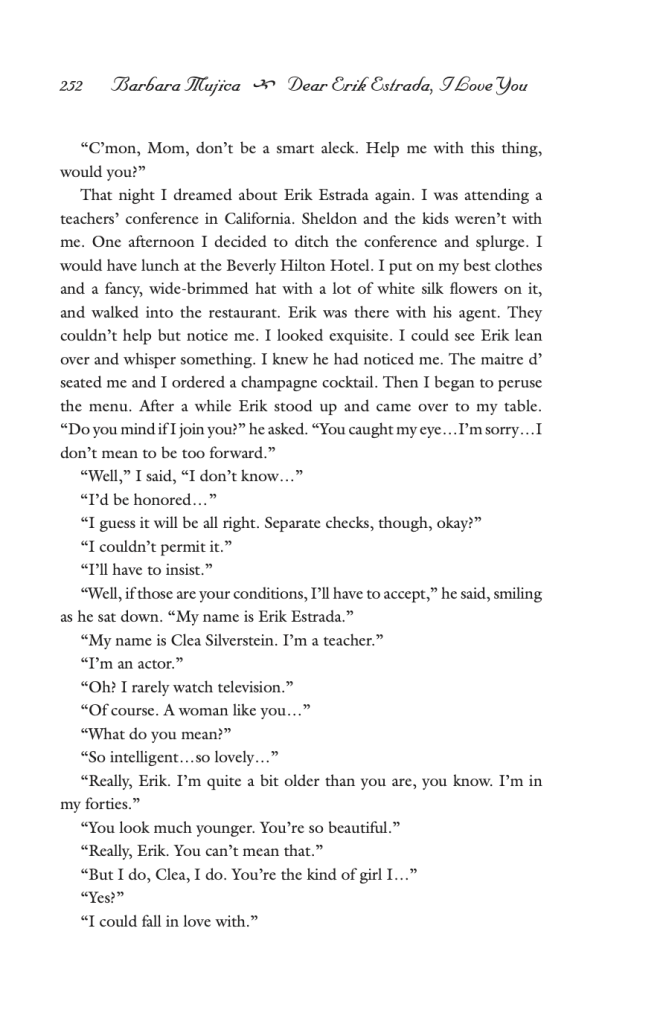
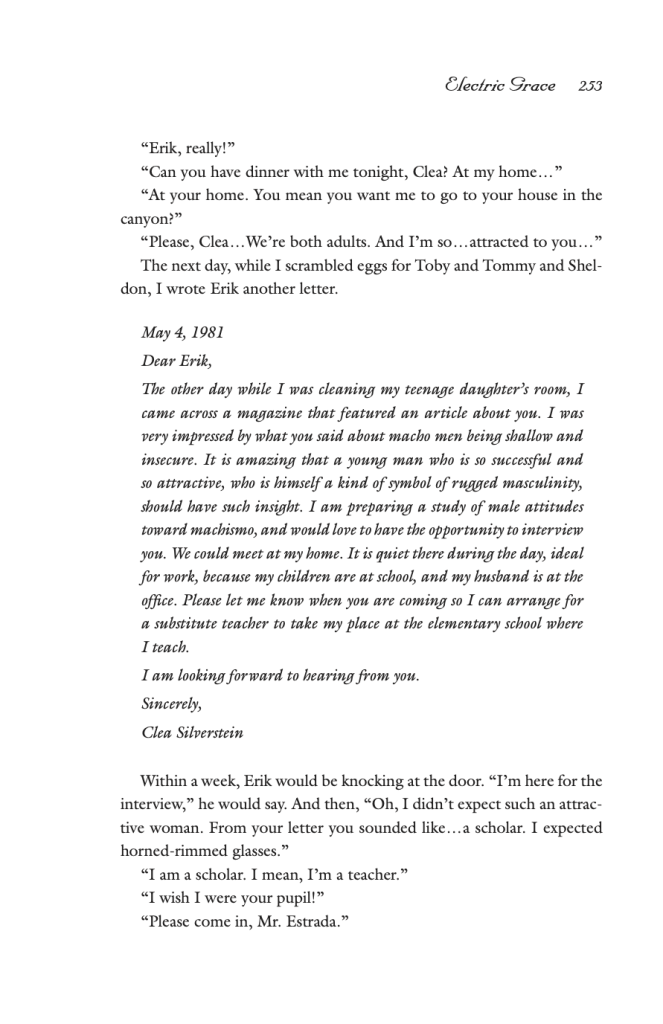
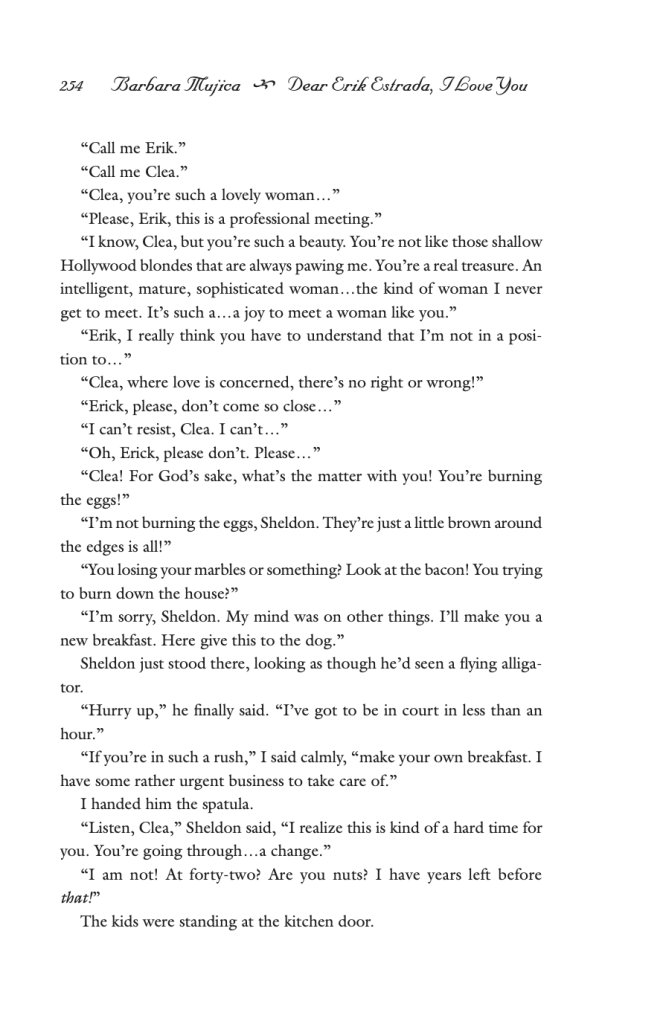
“Dear Erik Estrada, I Love You” illustrates the way Dr. Mujica writes with such vulnerability. The story follows mother and wife Clea Silverstein as she’s going through the everyday activities she must do, while internally dealing with growing older and feeling detached from everyday life. She starts to fantasize about gaining someone’s affection and appreciation. In her imagination, a voice repeats that she isn’t that old but rather ‘lovely’ and ‘mature.’ That voice belongs to the young Erik Estrada, a popular television star seen on the cover of her daughter’s magazine. Through the story we feel close to Clea and what she is experiencing through the first-person narrative, which shifts seamlessly in and out of her thoughts and between her imagination and reality. There is no distinction between the dialogue in her head and the dialogue in her everyday life, creating a unified feeling of the two. She imagines writing letters to Erik, sharing her thoughts and being listened to and appreciated for what she shares, which contrasts with what feels like short and insincere interactions with her family.
Societal ideals surrounding women was a topic that came up as Dr. Mujica discussed her piece. There is this perception that as women grow older and settle down with jobs and families, there is no longer any fantasy in their lives. She says to this, “I think that’s never true; everybody has an imagination and I think that for some people it’s their salvation. It’s what helps us get through really difficult times.” By using enticing dialogue and depicting the inner thoughts of Clea, Mujica shows how a woman copes with the life around her by using the fantasy within her. “Dear Erik Estrada, I Love You” is a relatable read, as we can all connect with the want to escape from the world around us. The past few years being so overwhelming, it can be necessary to find things we can escape in — whether that be through creation, reading or anything else that takes your mind elsewhere. This story is a truthful commentary on dealing with daunting realities through imagination, where Mujica transports you into an artful rendition of someone finding salvation.


 GRACE AND GRAVITY