
4/23/2022

Jeanne Jones is a creative fiction writer that enjoys pushing the boundaries of conventional writing forms. She is a graduate of the John Hopkins University writing program and recipient of the 2015 – 2016 Outstanding Fiction Student award. She currently lives in Hyattsville, Maryland with her husband and two children and works in the Washington metropolitan area as a creative writing teacher for K-12 students. Her fiction writing has been published in Abundant Grace: Fiction by D.C. Area Women, Barrelhouse Online, EEEL, and various other publications. She was also nominated as a finalist for NPR’s three-minute fiction contest.
Kaelyn Baucum is a graduating senior who is getting a bachelor’s degree in communications studies and a minor in creative writing. She has spent her years at college being a student mentor through leadership roles on campus. Growing up in New Jersey, she has developed a love of spending time outdoors in nature with family and friends and an appreciation for rich diverse communities. Kaelyn is most passionate about mental health and wellness and seeks to contribute to the growing movement in valuing and establishing holistic personal wellbeing. She believes there is power in the vulnerability of storytelling and connecting through shared and similar experiences.
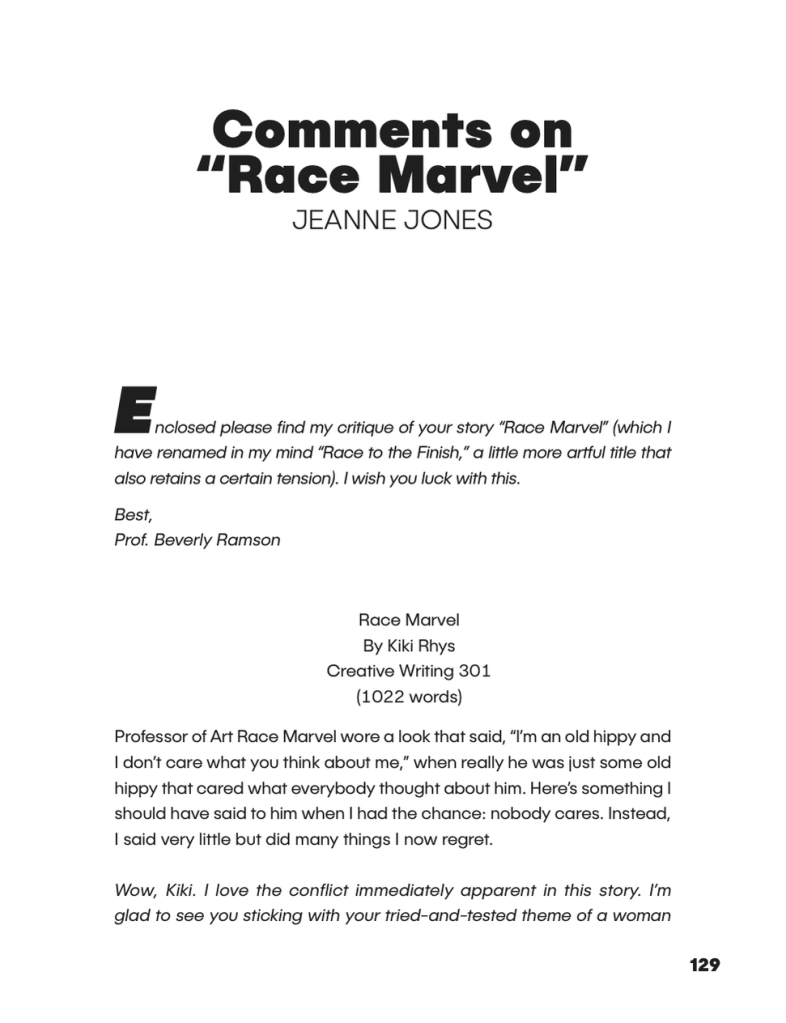
Introduction to “Comments on ‘Race Marvel’”
By Kaelyn Baucum
Creative writing is a vulnerable process as authors put a piece of themselves on the paper and expose themselves during the process of workshopping, opening their work and by extension themselves to comments, criticisms, complaints and hopefully compliments. Ideally, the workshop experience is a safe, empowering space for authors to receive constructive feedback; however, that is not always the case. Many creative writers have had the unfortunate experience of a workshop being a crushing nightmare that destroys not only their confidence in their work but their confidence in themselves as writers. In the short story, “Comments on ‘Race Marvel’” creative fiction writer Jeanna Jones speaks to some of the unpleasant experiences that exist in the workshop dynamic in a satirical and humorous way that speaks to a larger and important conversation of literary citizenship and the emotional reality of pursuing a creative path.
Jeanne Jones is a creative fiction writer that enjoys pushing the boundaries of conventional writing forms. She is a graduate of the John Hopkins University writing program and recipient of the 2015 – 2016 Outstanding Fiction Student award. She currently lives in Hyattsville, Maryland with her husband and two children and works in the Washington metropolitan area as a creative writing teacher for K-12 students. Her fiction writing has been published in Abundant Grace: Fiction by D.C. Area Women, Barrelhouse Online, EEEL, and various other publications. She was also nominated as a finalist for NPR’s three-minute fiction contest.
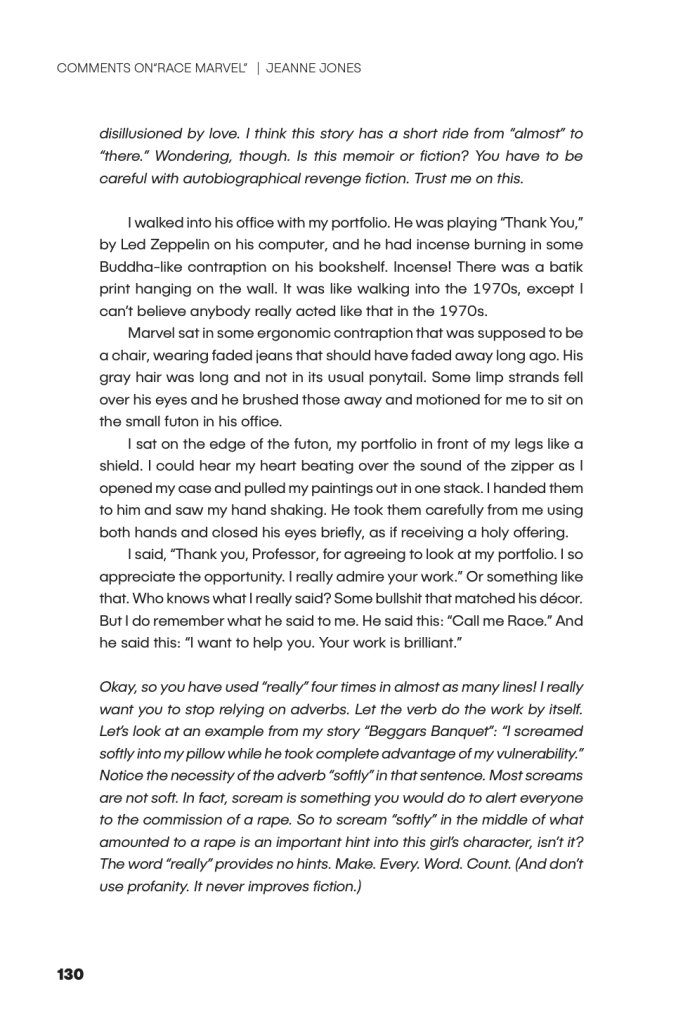
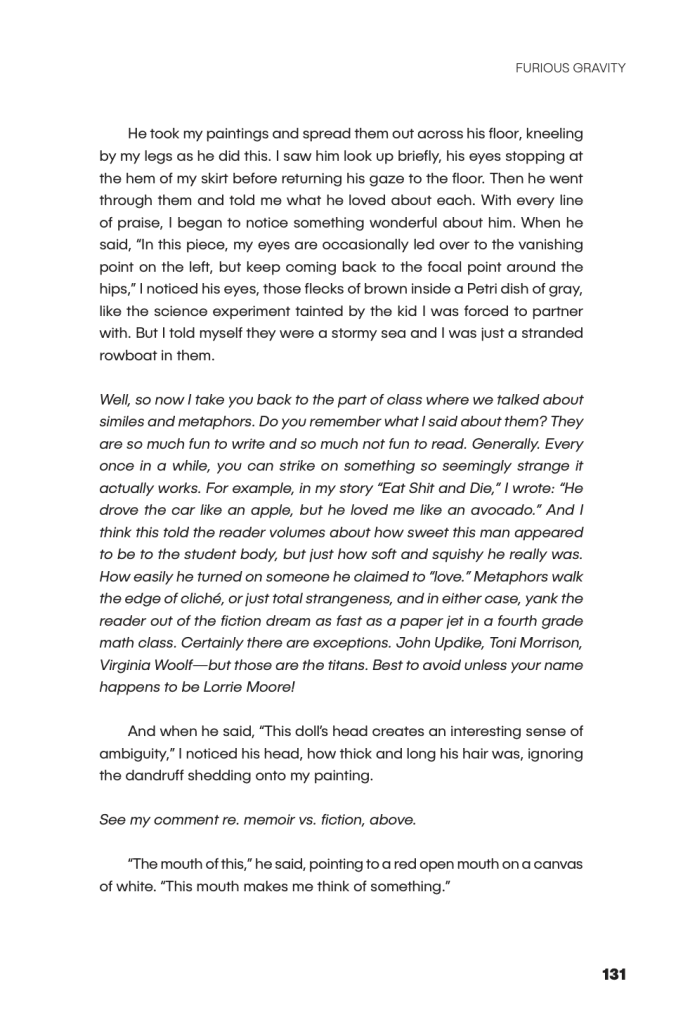
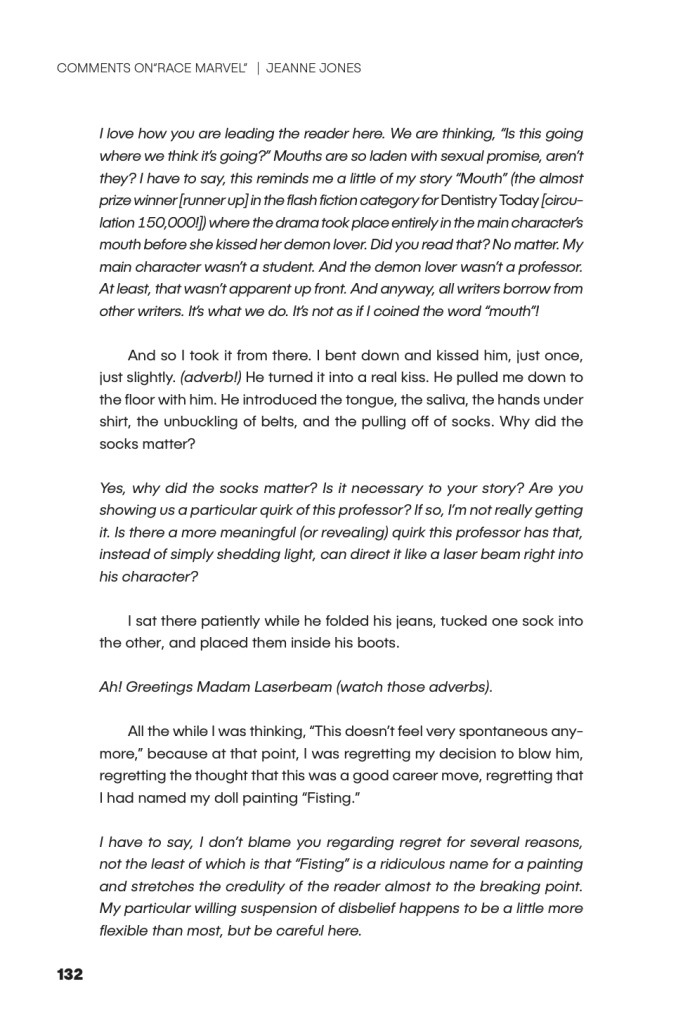
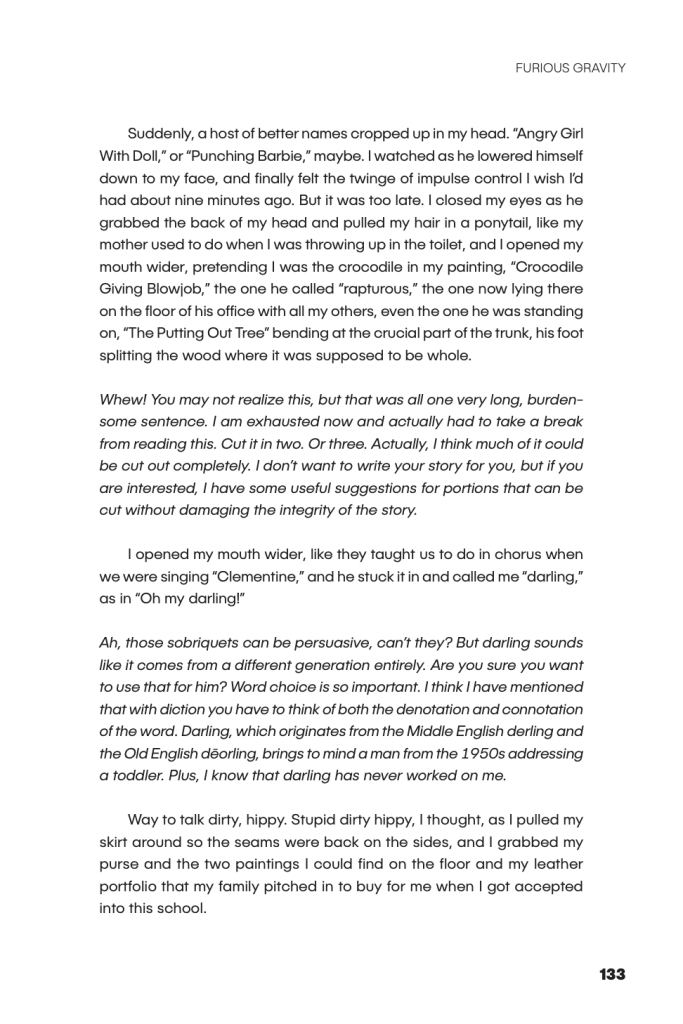
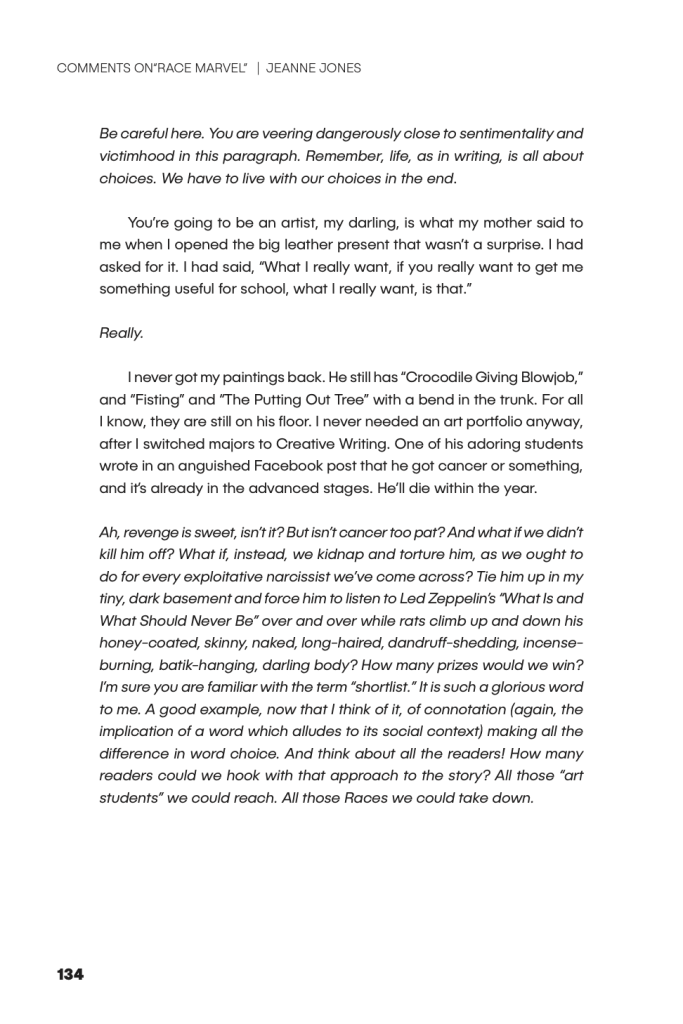
Jones’s story, “Comments on ‘Race Marvel’” is a hermit crab story, taking on the form of workshop comments, that allows the reader to experience and observe some of the harsh realities and tensions that are present in the creative community and workshop experience in the true writer fashion of showing not telling. The creative choice to use a hermit crab form as a vehicle allows Jones to make comments on power dynamics, creative integrity, ethics, and community citizenship by taking the reader on an entertaining journey without explicitly telling them how to feel or what to take away. The story uses humor to open the door for the larger and often difficult conversation that questions morality, ethics, sexuality, and self-worth, while also juxtaposing that with a commentary on literary citizenship between two women, one who is also in a position of power coming across as boastful and pretentious and another who is in a vulnerable space presenting their work. The professor in the story who is giving a student feedback uses the workshop experience to boost their own ego by embodying a superior stance. While some of the comments made were helpful they are largely overshadowed by the obnoxious and arrogant tone. It is apparent that some of the suggestions came from a preconceived notion of the writer opposed to the actual writing piece itself, which negatively affects the quality and accuracy of the critiques made in the workshop. A large portion of the recommendations are distasteful and counterproductive as they shift focus away from improving the writer’s story and instead place the attention on the professor’s own writing accomplishments while simultaneously discouraging the student who is being workshopped from being creative.
This speaks to the larger issue within the creative community where people who are in power are often unable to humble themselves, and create an environment where they are sensitive to the artist. They have trouble offering insightful comments that polish, purify, and honor the author’s unique voice and creative style, and find it difficult to offer constructive criticisms without trying to suppress the writer’s authenticity. Instead, they make suggestions that dim the creator’s voice and try to mold the writing into their preferences which is not the goal of the workshop. The goal of the workshop is to help the writer improve their delivery without contaminating their voice or artistic integrity with compassion and grace, transforming the writing in a positive way.
Another issue Jones speaks to is the power dynamics that exist between a male superior and a vulnerable woman with low self-esteem through the story, “Race Marvel” which is the story that is being commented on. The story highlights how men in power who target women they know are vulnerable and seeking forms of outside validation, take advantage of that and use it to their advantage for their own gain and pleasure. The professor represents men in power who weaponized their validation in a way that guarantees they are able to get what they wanted without losing anything of value. For him, it was about fun and pleasure, but for his female student, it was a way to potentially move up the career ladder. In the end, it is clear that the professor didn’t actually care about his student’s work, he saw her need for validation and vulnerability as an opportunity to get what he wanted which was sexual pleasure.
This story also speaks to the sexual dynamic that exists between having a heterosexual male superior to a woman, and the battle with low self-worth and esteem which can result in offering the one thing women know the heterosexual man will take. However, this almost always results in the woman giving more than she gets. In the trade of sexual activities, the men leave satisfied and the women leave with an even bigger hole in their hearts and a diminished sense of respect and worth. Jones calls attention to the way women feel they can’t say no or back out of a sexual encounter they initially agreed to, even if they changed their mind (which everyone has every right to do). Her story illuminates the way women without power keep giving and men with power keep taking.
Overall Jones’s short story infuses humor into the necessary conversation regarding the way power dynamics can negatively affect the creative community. This story speaks not only to the creative workshop dynamic but to overall human interaction and how authority figures can often be harmful to the people they have power over. Just because someone is in a position of power does not mean they know best or even have their subordinates’ best interest in mind, which is reflected in both the creative writing story the fictional character is telling as well as the larger story Jones is sharing in this hermit crab story. Both professors in the story take advantage of the power dynamic between them and their students either through inappropriate sexual relationships or gratuitous harsh criticism. “Comments on ‘Race Marvel’” highlight the importance of morality, ethics, self-awareness, and self-reflection in any meaningful, effective, and empowering creative community.
 GRACE AND GRAVITY