
4/18/2022

Leeya Mehta is a prize-winning poet, fiction writer and essayist. Her short stories have appeared in a number of international publications, including in the UK, US, Austria & India. She began her writing life with a review of Batman in the Times of India when she was fourteen, so she is very excited about the new Matt Reeves’ incarnation of the winged avenger in 2022.
Leeya’s new collection of poems is A Story of the World Before the Fence, exploring themes of blood nationalism and identity. Poems are forthcoming in a Red Hen Press anthology and the Penguin Book of Modern Indian Poets. Leeya writes a popular column on the literary life, The Company We Keep and is an editor with Plume Poetry, where she features poets from Maine to Bombay. Leeya grew up in Bombay and studied at Oxford University and at Georgetown University where she was editor-in-chief of the Georgetown Public Policy Review. You can find more on her work at https://leeyamehta.com/
Jamie Hennick is a literary fiction writer, nonprofit strategist and educator currently pursuing her MFA at American University. Through her writing, she journeys with characters who begin to reveal themselves as they identify falsehoods or inconsistencies in stories they have told themselves, exploring what beauty we can salvage in the delicate, inevitable breaking we experience as humans on this planet. In her spare time she enjoys roller skating, sitting in chairs and reading, and dreaming of future dog ownership. Reach out to talk writing, reading, or whatever else you might dream up in the literary realm at jamie.hennick@gmail.com.
Introduction to “How Does One Make a Woman Like That Happy?”
By Jamie Hennick
For many people around the globe, the 2016 election cycle in the United States turned the world upside down. By November, we collectively had endured a campaign cycle charged with many forms of vitriol. We had witnessed a particularly incessant sexism pointed at the Democratic Nominee, Hilary Clinton, with constant questions about her qualifications, her capabilities and opponents who seemingly took every opportunity to discredit her fitness for office. DC based author Leeya Mehta processed some of her observations from this political era in her short story “How Does One Make a Woman Like that Happy,” which was inspired by the political backdrop of the 2016 election. The story was featured in Furious Gravity, volume 9 of Grace and Gravity in early 2020. She was curious to think more deeply about women in politics and the dynamic between two ambitious people. In the story, we meet a married couple, Jamie and Julia, on a visit to the Delaware shore as Jamie grapples with his self-perception in the perceived shadow of his ambitious wife, Julia. Though the story is told from Jamie’s point of view, his male perspective is superimposed with a sharp and intentional feminine gaze to show a “certain kind of woman who you encounter in Washington [and elsewhere, like Massachusetts], who has a sweetness but also an ambition but is somehow regarded by her man as an upstart… you wonder if she imagines herself being as good as him.” Mehta says that this couple was not modeled specifically after the Clintons, but was inspired thinking about the interior lives of powerful politicians seeking the next big thing.
Mehta, a prize-winning poet, fiction writer, essayist, dedicated literary citizen and professional working in international development, brings a particular questioning lens to her work. Her writing is cross cutting, and interrogates why our world is shaped the way it is. Her poetry and prose takes us, the reader, to places of deep emotion and self-reflection as her characters travel on a path of healing, of understanding. She demonstrates a concise understanding of human emotions and what it means to walk this earth through works that explore the “intimate space of the family and how it relates to the physical geography of cities and nature.” Her newest collection of poetry, A Story of the World Before the Fence, explores through centuries and across continents the “transgenerational trauma of her ancestors, the Zoroastrian Parsis, to narratively structure an intimate, feminocentric experience of cultural and personal displacement.” Mehta’s work is expansive, traversing and captivating across genres.
The themes in her work are informed by her upbringing, studies and work. Mehta was born into a Parsi Zoroastrian family in Mumbai where she lived with her mother and maternal grandparents, spending time in their apartment that overlooked the Arabian Sea. Mehta studied Philosophy, Politics and Economics at Oxford before relocating to Washington DC in 2004 where she continued her education at Georgetown University studying public policy. A visit to Mehta’s Linkedin reveals her concurrent career in international development, most recently as a consultant with the World Bank, where she works with project teams to assess and improve the gender responsiveness of their project designs. Her interests have brought her to all corners of the world, from Japan to the Arctic lands to countries across the African continent, to her own home city of Mumbai. She says she’s “particularly interested in how girls find their voice; and how men and women can be supported through policy and literature, to find a better balance in their lives while striving for excellence in their fields.”
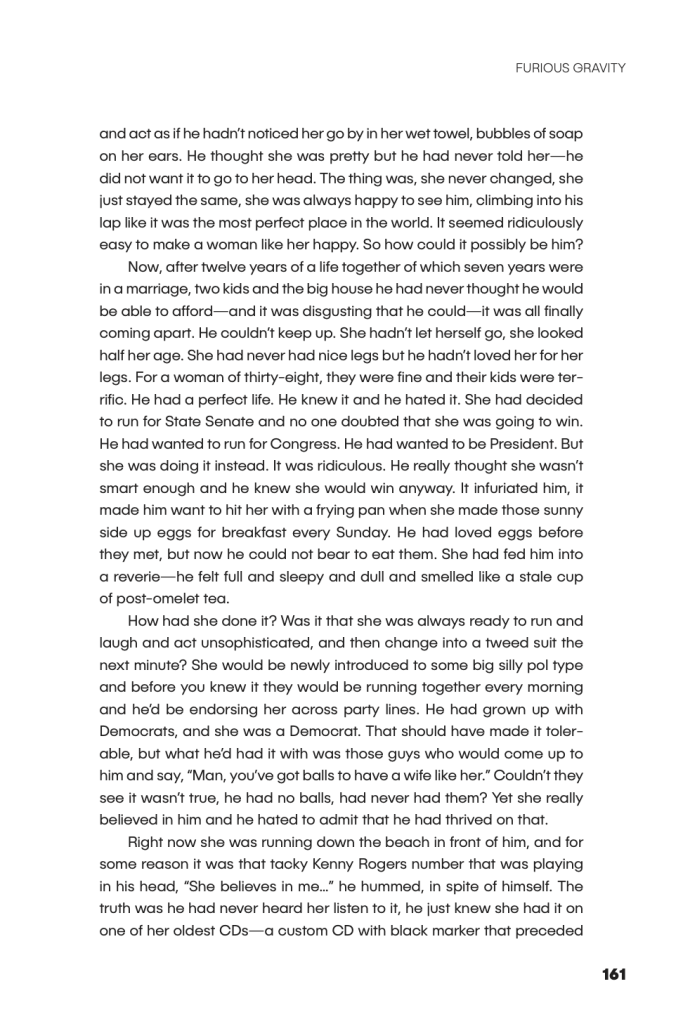
In “How Does One Make a Woman Like that Happy?” Mehta explores the politics between a man and a woman. The couple has been married for twelve years but we open with Jamie remembering that he had asked himself that eponymous question the first time he met Julia while studying at Oxford. We learn that Jamie is stuck to the point of fixation on the improbability of their love, that someone as magnetic as Julia couldn’t possibly be full, complete in a relationship with him. Mehta offers poetic images of Jamie’s preoccupation, describing Julia as “small; she had a tiny frame, but she drew him in; it seemed she was vast and endless, and from the moment he fell in love with her, it felt like he was falling” – Jamie feels despair in his perceived smallness and inadequacy.
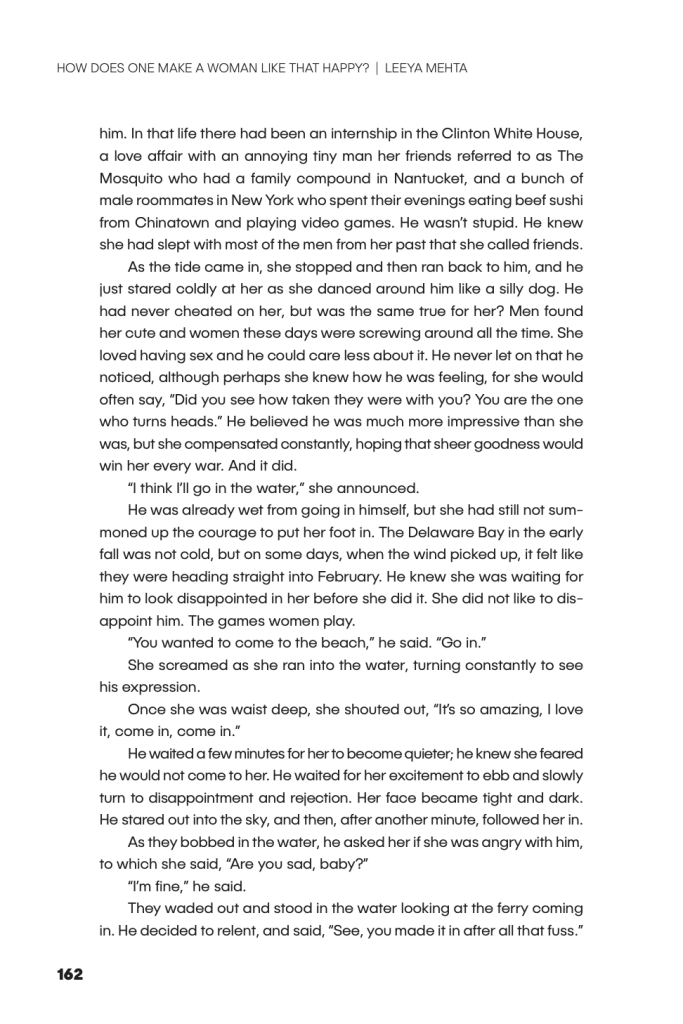
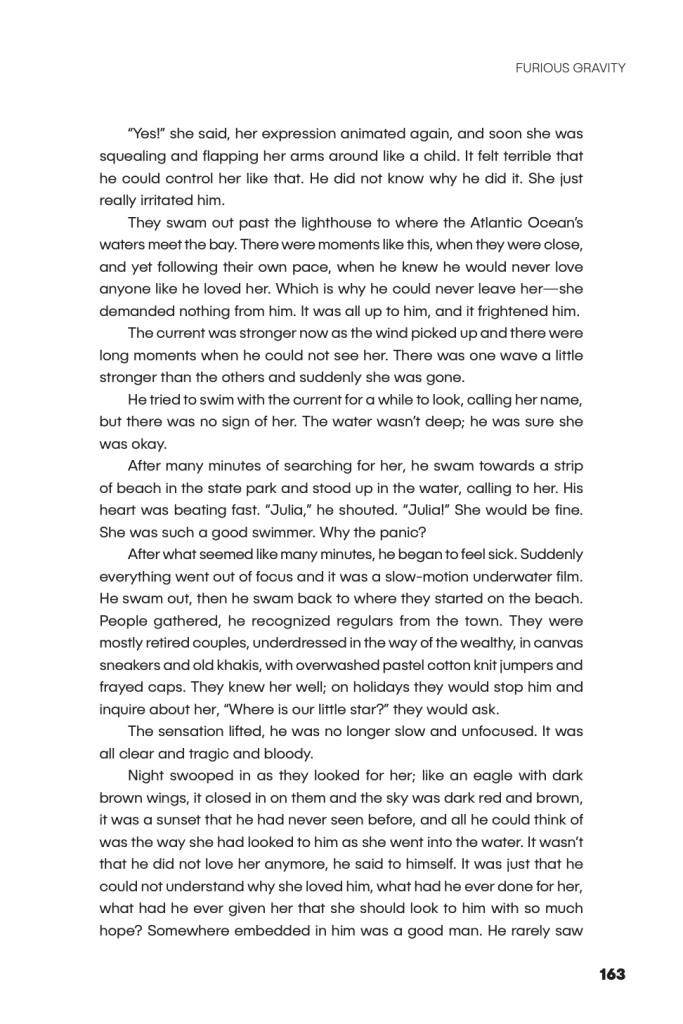
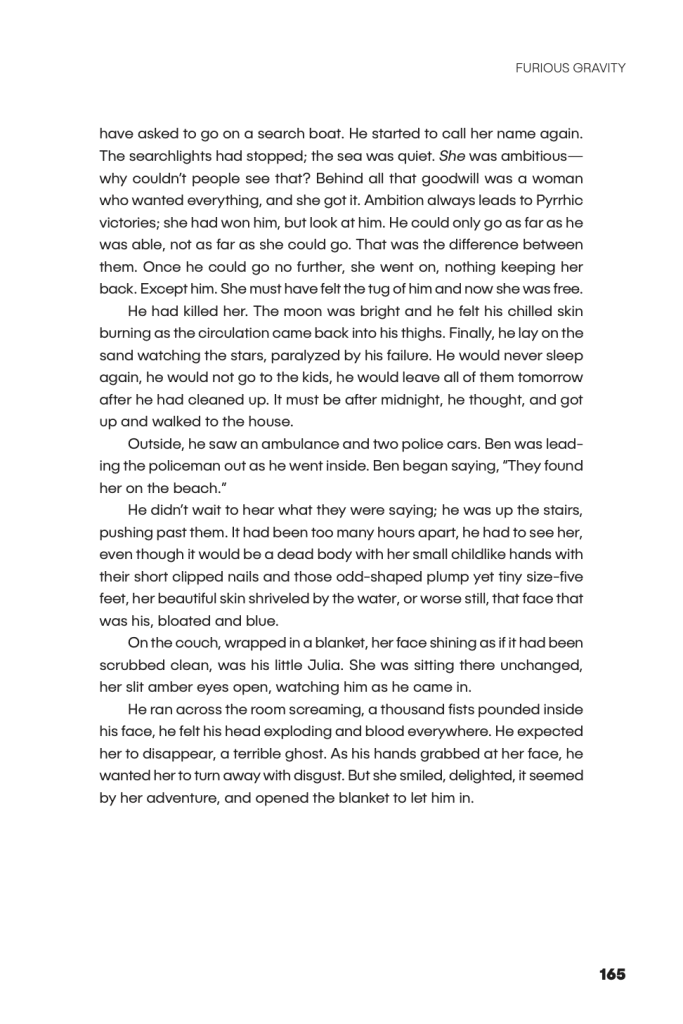
Jamie reflects that “love is painted as something magnetic, inevitable, some celestial movement before collision and fusion of their lives,” and while they explore the Delaware beach, is preoccupied that their relationship instead feels somewhat competitive, unsatisfying. The root of his current jealousy is that Julia has decided to run for public office, something he himself once wanted. Her ambition had become unbearable. He is obviously irritated with her, like when he refers to “danc[ing] around him like a silly dog” in the water. Here, we see the cruelty of placing these projections on Julia, who just wants to go for a swim. Jamie’s thoughts are woven through active scenes and flashbacks, an ebb and flow of adoration and jealousy that mirrors the ocean in which they swim. They swim out to a lighthouse and Julia is somehow swept away. There is a search party through the afternoon, into the evening. Jamie thinks he has killed her.
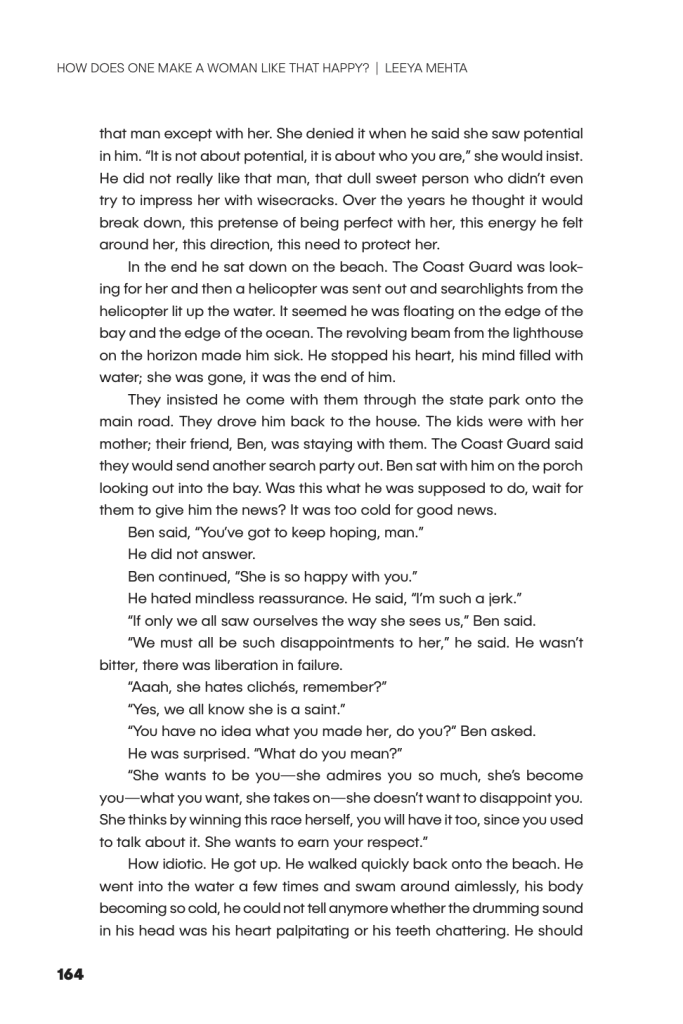
Jamie’s inability to pinpoint his aggravation is washed away in Julia’s absence, replaced by an urgency to find her. In an exchange with a friend towards the story’s close, Jamie realizes that Julia, too, is in a race with herself, her ambition a symptom of never wanting to disappoint Jamie. This only angers Jamie further, who resists this truth, that he influences Julia’s self-perception and vice versa, that this influence was never one-directional.
The story builds tension like an incoming ocean wave, beautiful in the build up and forceful in the crash against the shore, graceful in its retreat back out to sea. It highlights the intricacies of codependency and feelings of insufficiency that dually ambitious partners can feel. Mehta’s use of language throughout the story illustrates for the reader the pain and nuance of this insecurity. By telling the story through Jamie’s point of view, we become acquainted with Jamie’s own feelings about himself and the discontentment he himself doesn’t know how to trace or articulate and only expresses through aggravation toward Julia. Julia, as all partners are, is imperfect, flawed. But we learn how she loves Jamie, particularly at one point when she senses his frustration and asks “Are you sad, baby?” Jamie says he’s fine.
Mehta’s piece helps us investigate what happens when we tell ourselves that we are not enough; what relationships suffer when we are discontent and questioning, furious with who we’ve become? Specifically this story is a conversation about masculinity, about the politics between a man and a woman. Through this story, Mehta reveals a male neurosis that is rarely discussed. In politics, and in this story, it is typically the woman who is too much, overwhelming, power hungry, and so on. If we step beyond politics, we might take away from the story that perhaps, in a world that pressurizes a standard version of “success,” stories like How Does One Make a Woman Like that Happy? can help us more deeply understand what happiness can look like outside of any preconceived notions. How might our love, for ourselves and others, expand?
Mehta’s work has been wide reaching, winning an international publication award in The Atlanta Review and publishing in The Beloit Poetry Journal (Pushcart nominee), Beltway Poetry Quarterly, Chandrabhagha, District Lit (Reader’s Choice Award), Poetry London, and Vinyl, amongst others. In addition to her work, Mehta demonstrates a commitment to literary citizenship. She writes the column The Company we Keep, a book blog that explores different aspects of our literary lives through pensive reflections on fiction, nonfiction, and poetry. With her blog and her editorial role at Plume poetry magazine, Mehta is in constant conversation with other authors and literary works, uplifting and sharing the stories of others as much as she shares her own. Mehta also volunteers with numerous literary, community and education organizations including running a Lit Lab in DC public schools and hosting a reading series with The Writers’ Center. In speaking with Mehta, it is clear that the writing community is generative and critical to keep moving forward.
Mehta is currently working on a novel Extinction and was happy to reconnect with the Grace and Gravity community. Mehta says of her writerly life in DC that it truly is her community (in addition to the hours of actual writing!) that propels her forward. She continues to love writing and the opportunity it gives her to share about the things that inspire and transform her.
 GRACE AND GRAVITY