
4/11/2022

Melanie S. Hatter is the author of two novels and one short story collection. Selected by Edwidge Danticat, Malawi’s Sisters won the inaugural Kimbilio National Fiction Prize and is published by Four Way Books, 2019. The Color of My Soul won the 2011 Washington Writers’ Publishing House Fiction Prize, and Let No One Weep for Me, Stories of Love and Loss was released in 2015. Her short stories have appeared in The Whistling Fire, Defying Gravity, TimBookTu and Diverse Voices Quarterly. She was a runner-up winner in the Fiction category of the 2015 and 2016 Montgomery Writes contests sponsored by the Maryland Writers’ Association, and she received a 2019 Maryland State Arts Council grant for her writing. She is a participating author with the PEN/Faulkner Writers in Schools program in Washington, D.C., and serves on the board of the Washington Writers’ Publishing House. Melanie received a bachelor’s degree in mass media arts from Hampton University and a master’s in writing from Johns Hopkins University. She has a background in journalism and corporate communications.
Pam Gibson, a freelance film producer and screenwriter, began her career as a music video producer / director in Hip-hop’s early years. This success led to opportunities to write / produce the feature film “Strictly Business,” distributed by Warner Bros, representation with the William Morris Talent Agency, and a decade on the Paramount lot. Attending American University’s MFA program in Creative Writing, she is at work on a Contemporary Fiction novel, polishing her skills as an essayist, educator, and growing as a writer / Citizen of the World. Constant evolution and reinvention – that’s the artist life.
Introduction to “Something Worth Saving”
By Pam Gibson
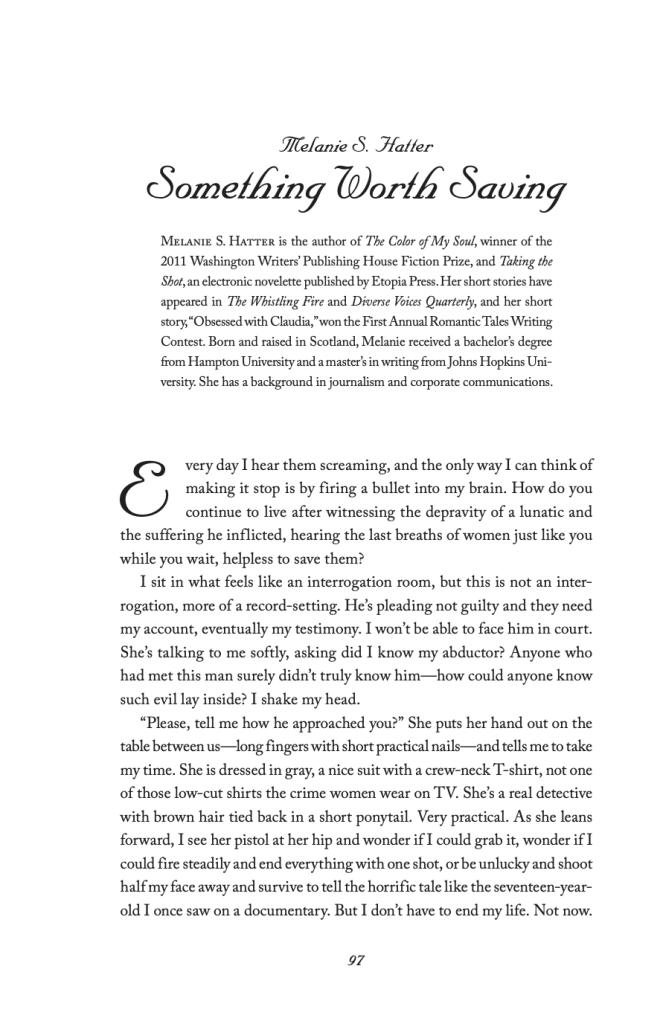
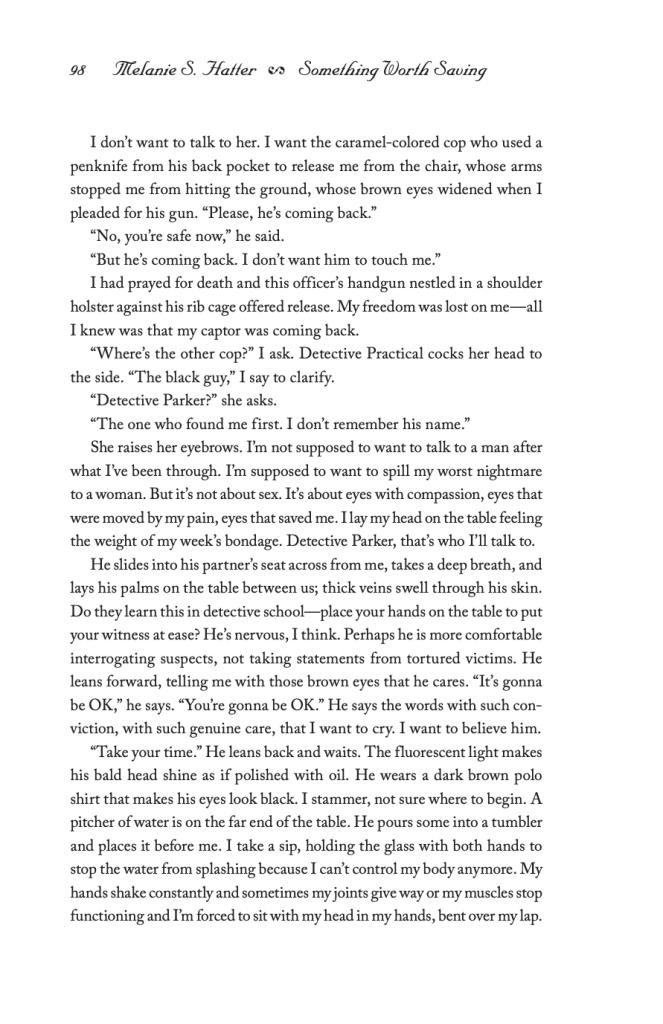
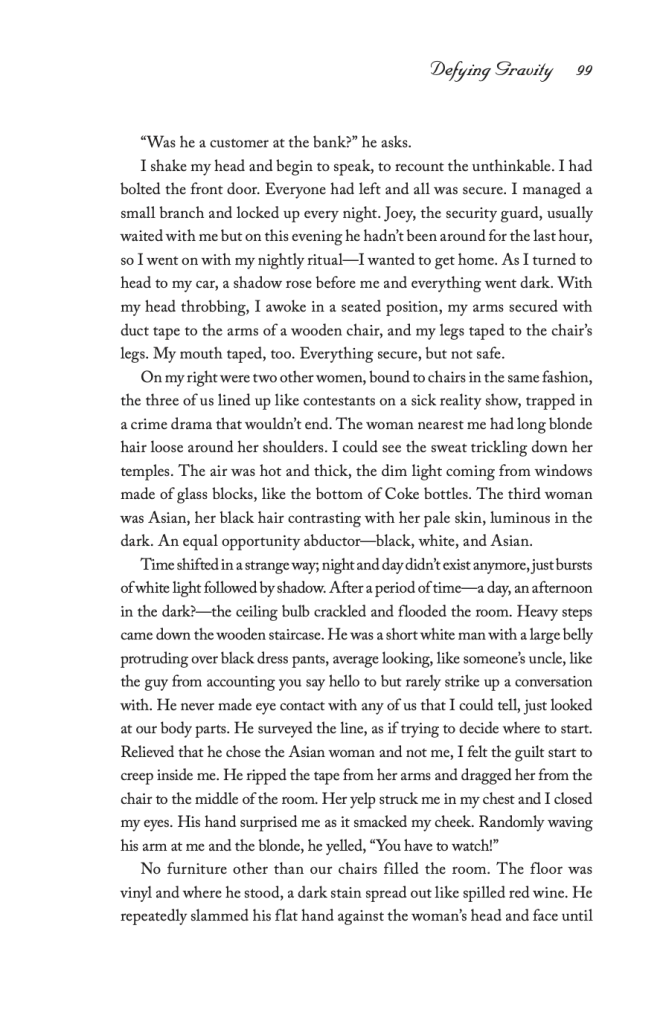
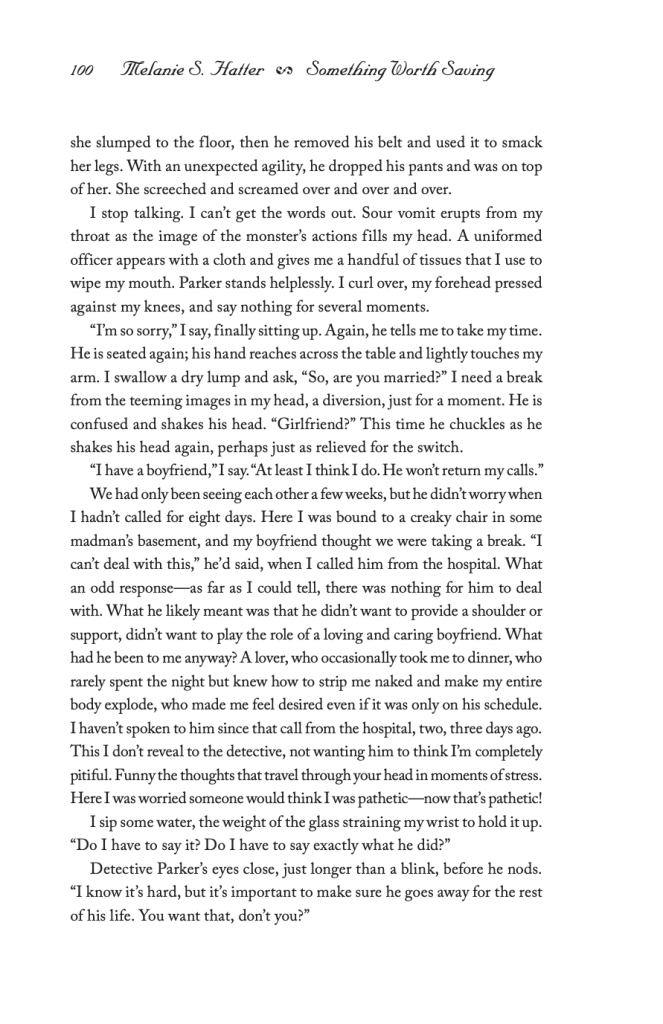
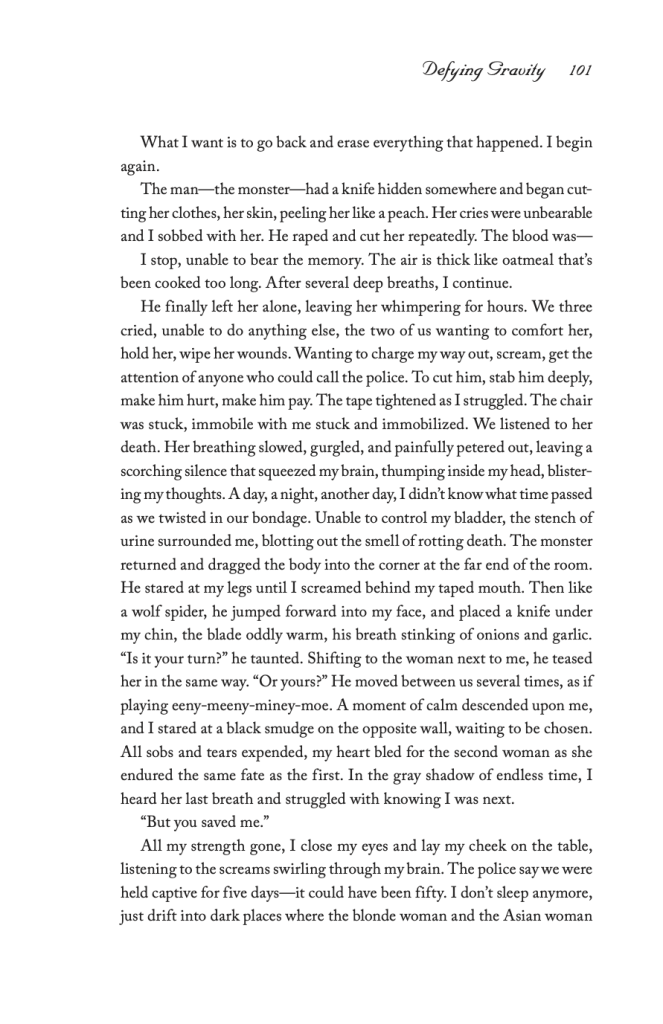
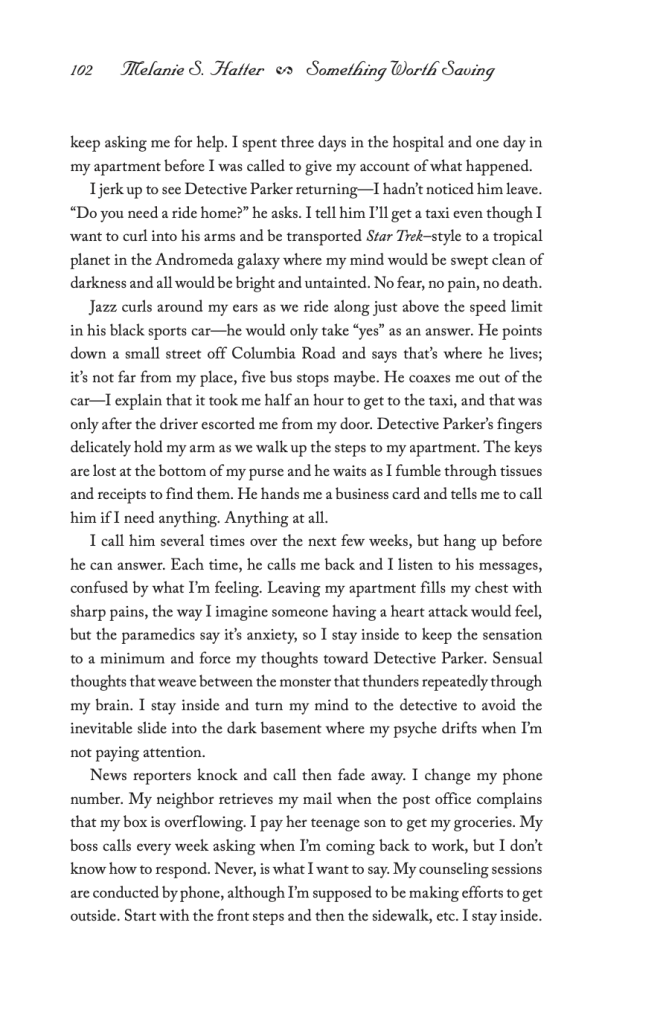
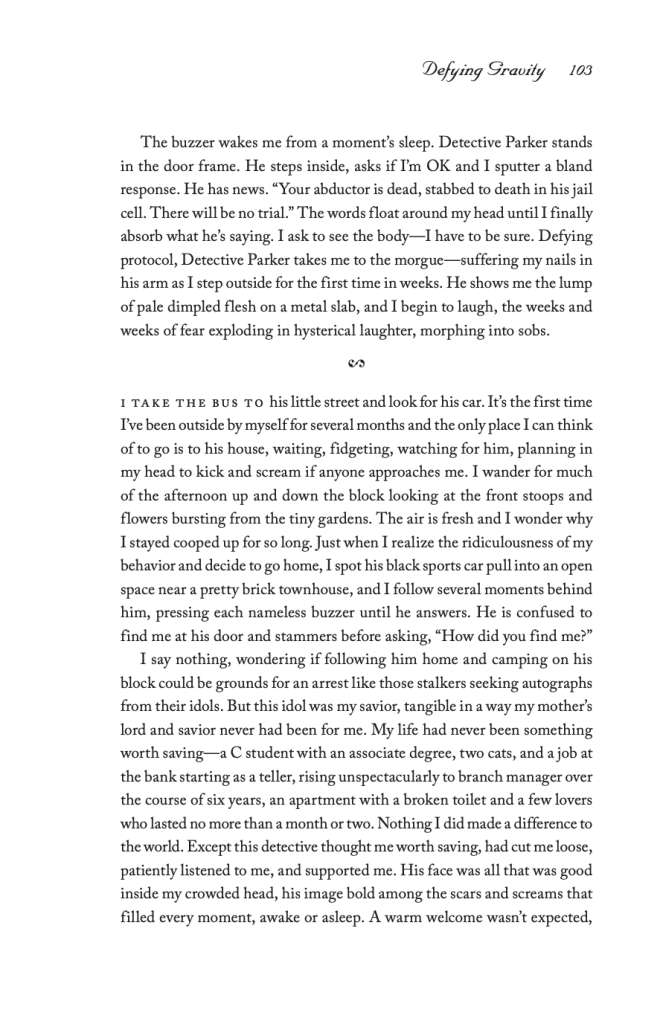
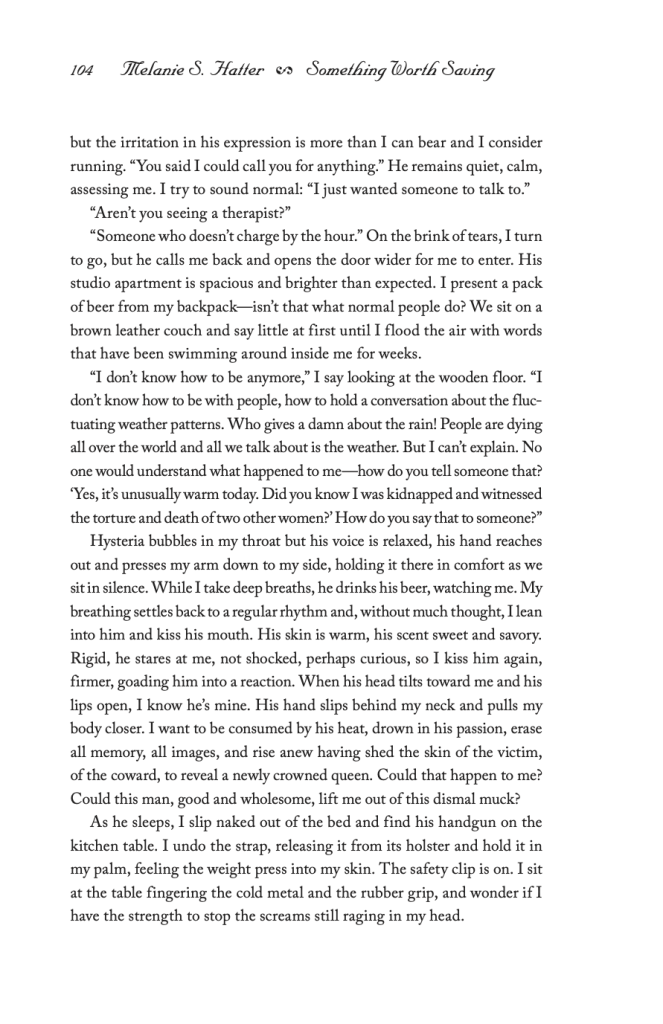
“Something Worth Saving” is a shocking crime story investigating the aftermath of the victimization of the most insidious crimes of abduction, rape, and murder, written in uncomfortably graphic detail. I loved it. However, a reader advisory is recommended. It’s highly provocative prose. I was riveted until its solemn last line in its grizzly grasp from the open. The focus is not so much on the crime but the victim’s journey after her rescue to reassemble a shell-shocked existence, if at all possible. It is part of the compelling, self-published short-story collection, Let No One Weep for Me: Stories of Love and Loss, which attentively explores the heartache of loss and the peace of discovery. The author, a lovely, soft-spoken writer, Melanie S. Hatter, begs the question, “How do you recover a life after surviving something so sinister?” Too often, crime stories, on the page and screen, delve deep into investigations and resolutions that exclude the messy details of victimization’s aftermath. What happens to these broken people? How do they re-enter a shattered life? Hatter offers up a compelling, honest explanation in this incendiary short story.
A disturbing opening line, “Every day I hear them screaming, and the only way I can think of making it stop is by firing a bullet into my brain., sets a tone reminiscent of procedural crime shows, which, as it happens, is its inspiration. Hatter admits, “I love cop shows. I watched a lot of CSI and Criminal Minds; those two shows are intense. I give them credit for this story because I was caught up in those bizarre shows.” I concur; it’s a guilty pleasure of millions, my mom included, so I’ve seen my share. Episodes formulaically end with the victim saved and the criminal defeated; everything neatly wrapped up. As we all know, life doesn’t always work out that way. Crime and victimization is a messy business that leaves its gory remnants long after the scene has been scrubbed clean. Something Worth Saving takes the reader there, following the victim past the darkness of a traumatic experience into the paralyzing anxiety and terrors of Post-Traumatic Stress. Through Hatter’s masterful use of evocative sensory description and choice of first-person narrative, the reader transports into the dark recesses of humanity. Hatter felt this story had to be from the victim’s point of view; it wouldn’t have had the same power in the third-person or omniscient voice. This story is inherently about what is happening inside this troubled character’s psyche. She’s had this experience and the confusion about how or if to continue living with its unbearable weight.
Something Worth Saving wasn’t a story written almost entirely in her head like the novella, Taking the Shot, another harrowing story documenting a photojournalist’s kidnapping and imprisonment. As Hatter explains, this story took her a concerted effort to get its graphic images on the page. A consummate “Pantser,” Hatter follows the spark of an idea and discovers the story as she writes; no plans or outlines, just thinking, writing, and re-writing. This process can prove too immersive with emotionally charged material. Hatter wrote it a piece at a time to not be overwhelmed, creating space between the story’s darkness, its intense imagery, and her life. She did the same when writing Malawi’s Sisters, about the murder of a young Black woman by a white man, inspired by the 2013 shooting of Renisha McBride. The raw emotion of this tale was overwhelming at times to write; Hatter admits that doing activities like escaping to the nearby woods for a walk with her dog helps her think objectively and not get caught up in the emotion.
Although Hatter is comfortable exploring the tragically uncomfortable in her works, Something Worth Saving is a bit of an outlier in its overly graphic details. In no other story are the details as vivid; even in Malawi’s Sisters, although a report of a murder, the novel’s focus is how the family deals with their loss, not the crime scene. To wallow in those details would come off as trauma-porn, which is never Hatter’s intent. In Something Worth Saving, the graphic nature of the crime details is vital for the reader to realize the heart of this tale; how PTSD crushes a victim’s self-worth. How surviving a terrifying injustice is mind and often life-altering. The question of “Why Me?” tends to haunt and paralyze a victim. The protagonist lives an average life, nothing exciting, nothing major, and she doesn’t see herself as something worth saving, Hatter explains. Survivor’s remorse, accurate and seriously debilitating, puts the narrator’s life in jeopardy long after the physical threat is over. How can she reconcile feelings of worthlessness?
No definitive answers conclude Something Worth Saving, just observation without judgment. The reader, as I was, is left to draw conclusions and ruminate on solutions, which as in life, are not easily found. After reading this intoxicating short story, you will forever be in tune with the victim’s experience beyond the screen and the page. The realization that “Happily Ever After” is all but impossible for the person pushed to the brink of their existence, after barely living through the worst humanity can dish out, is a hard truth to accept. I feel it would take copious amounts of self-love to hold on to one’s self-worth in the face of such degradation and loss. Who of you has it in you to overcome the odds? I leave this story questioning myself.
The following is a selection from Defying Gravity, pages 97-104.

To learn more about Melanie S. Hatter’s work, such as her novel Malawi’s Sisters, visit her website.
 GRACE AND GRAVITY